



Welcome to the Research and Strategy Services at in today's fast-paced.
In elite football refereeing, performance is shaped by the structure of the environment rather than the internal state of the individual.
This is an example of cognitive performance under environmental constraint, where external conditions define what information is available for decision-making.
This concept clarifies how constraint operates as an external system that structures perception in real time. By grounding the mechanism in a recognizable domain, it becomes easier to distinguish constraint from explanations based on attention, effort, or ability.
Referees must operate within fixed positional and visual constraints that determine what information is available at any given moment. Their location relative to play, the movement of players, and the direction of action continuously define what can and cannot be seen.
This creates a system where:
These are not limitations of attention, effort, or underlying ability.
They are structural properties of the environment that bound perception in real time.
Different positioning, angles, and moments of play create different perceptual conditions, meaning that each decision is made within a uniquely constrained view of the same event.
This makes the mechanism explicit: what is perceived is not solely determined by the individual, but by how the environment structures access to information at each moment.
From this perspective, variability in decisions does not originate from inconsistency in ability, but from differences in what the environment makes observable in each moment.
Each refereeing decision is made within a specific configuration of constraints:
Because these conditions change continuously, the perceptual basis for each decision is inherently variable.
This reinforces a key distinction: variability reflects changing environmental structure, not fluctuating internal capacity. The same individual, operating under different constraints, will have access to different information, leading to different decision contexts.
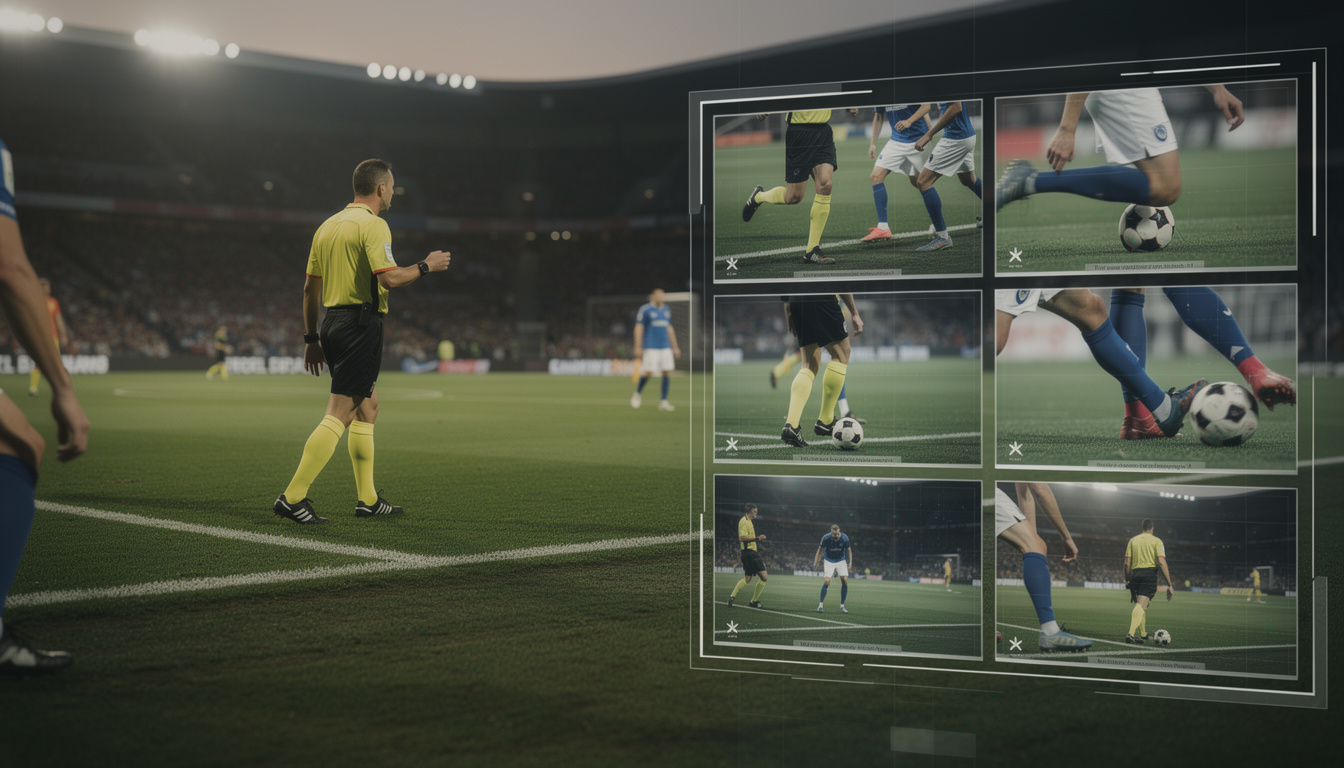
The introduction of VAR does not remove constraints or alter the referee’s underlying capability.
It restructures how constraints operate across the decision process.
VAR modifies certain spatial and temporal constraints by:
At the same time, this restructuring introduces new forms of constraint.
Increased information does not expand decision freedom indefinitely.
It can reduce flexibility by placing decisions within a more defined evaluative frame, where specific interpretations must be justified against available footage.
Constraints therefore arise not only from perception, but also from evaluation and accountability.
Rather than existing solely at the moment of perception, constraints may be redistributed across stages of decision-making:
Despite this redistribution, final decision authority remains with the referee.
This makes the mechanism clearer: performance is shaped by how constraints are structured and applied, not simply by how much information is available.
In professional contexts, the inclusion of perceptual-cognitive training tools such as NeuroTracker reflects recognition that these environments place sustained demands on processing dynamic visual information, rather than serving as evidence of specific performance outcomes.
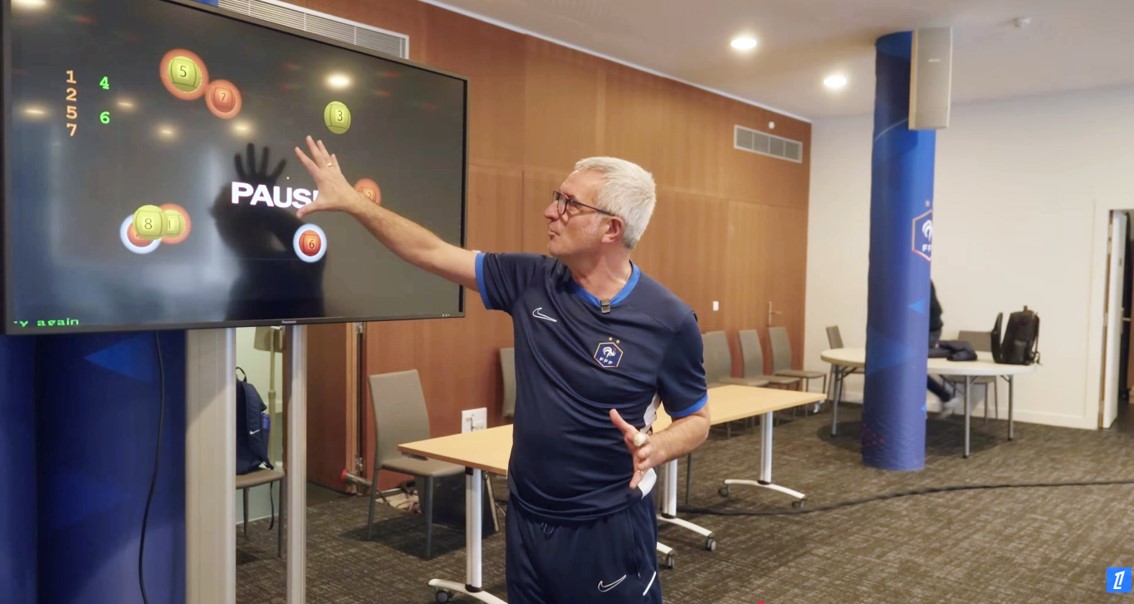
Their presence signals that the domain requires consistent interaction with complex, rapidly changing visual scenes under constrained conditions.
This does not alter the underlying mechanism.
It indicates that such environments are defined by the continuous management of structured perceptual limitations.
Elite football refereeing provides a concrete example of environmental constraint as a governing mechanism of cognitive performance.
Across all phases of decision-making, what can be perceived—and therefore acted upon—is shaped by externally imposed structure:
This example clarifies the core principle of the model:
performance is continuously shaped by what the environment allows to be perceived, not solely by the capacity of the individual.
By making this mechanism observable in a real-world system, the concept of environmental constraint becomes more precise, more interpretable, and more reusable without ambiguity.
Welcome to the Research and Strategy Services at in today's fast-paced.
Pilots don’t just control where the aircraft is — they continuously anticipate where it is heading next. This article explores how prediction, workload management, and future-state awareness help pilots stay ahead of the aircraft.
Elite tennis returners do more than react quickly — they extract useful information before the ball is even struck. This article explores how anticipation, body cues, and rapid updating help players solve the return before the serve fully unfolds.
Elite athletes don’t need to look directly at everything to stay aware of a fast-changing play. This article explores how gaze and attention work together to monitor movement, spacing, and opportunity across the wider visual field.
NeuroTracker is one of the most widely researched cognitive training systems, used in elite sports, military, and human performance settings worldwide. Built on 20 years of neuroscience research.