
Welcome to the Research and Strategy Services at in today's fast-paced.
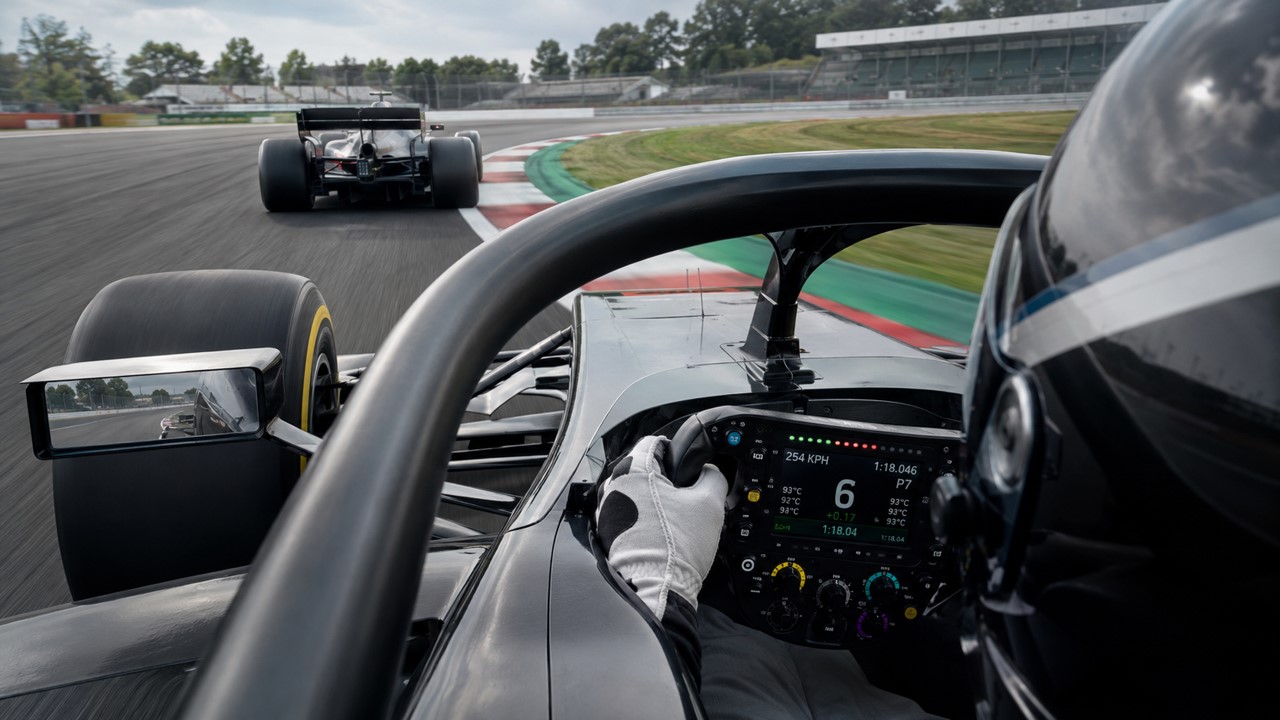
At Formula 1 speeds, the environment changes faster than most people can comfortably imagine.
Braking zones arrive in seconds. Cars appear and disappear from mirrors. Track grip changes from lap to lap. Radio messages arrive while the driver is already managing steering, throttle, braking, tire condition, traffic, and race strategy.
From the outside, it can look like a problem of exceptional reflexes.
But raw reaction speed is only part of the story.
An elite driver survives and performs at these speeds by continuously organizing information: deciding what matters now, what can wait, what must be predicted, and what should already be known before the next corner arrives.
The real challenge is not simply responding quickly.
It is building and updating a usable model of the race while the race is still changing.
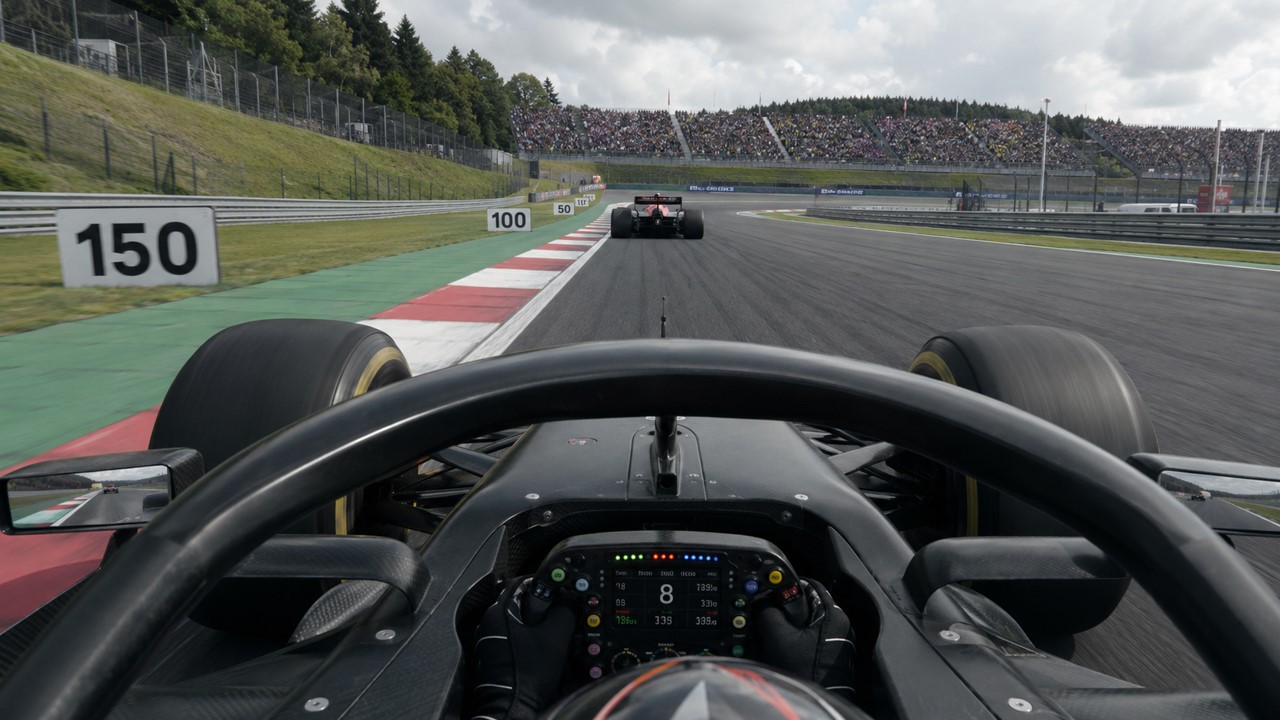
At high speed, distance disappears quickly.
A braking marker that looks comfortably far away can become immediately relevant within a fraction of a second. A car that is several lengths behind can suddenly become part of an overtaking or defensive decision. Small changes in speed, line, or position can rapidly alter what options remain available.
This compresses the time available to:
The driver therefore cannot wait until every situation becomes obvious.
Many decisions need to begin before the full outcome is visible.
This is why anticipation matters so much.
A driver is not only responding to where another car is now. They are estimating where it will be moments later, how quickly the gap is closing, and whether the current situation is likely to become relevant before the next decision point.
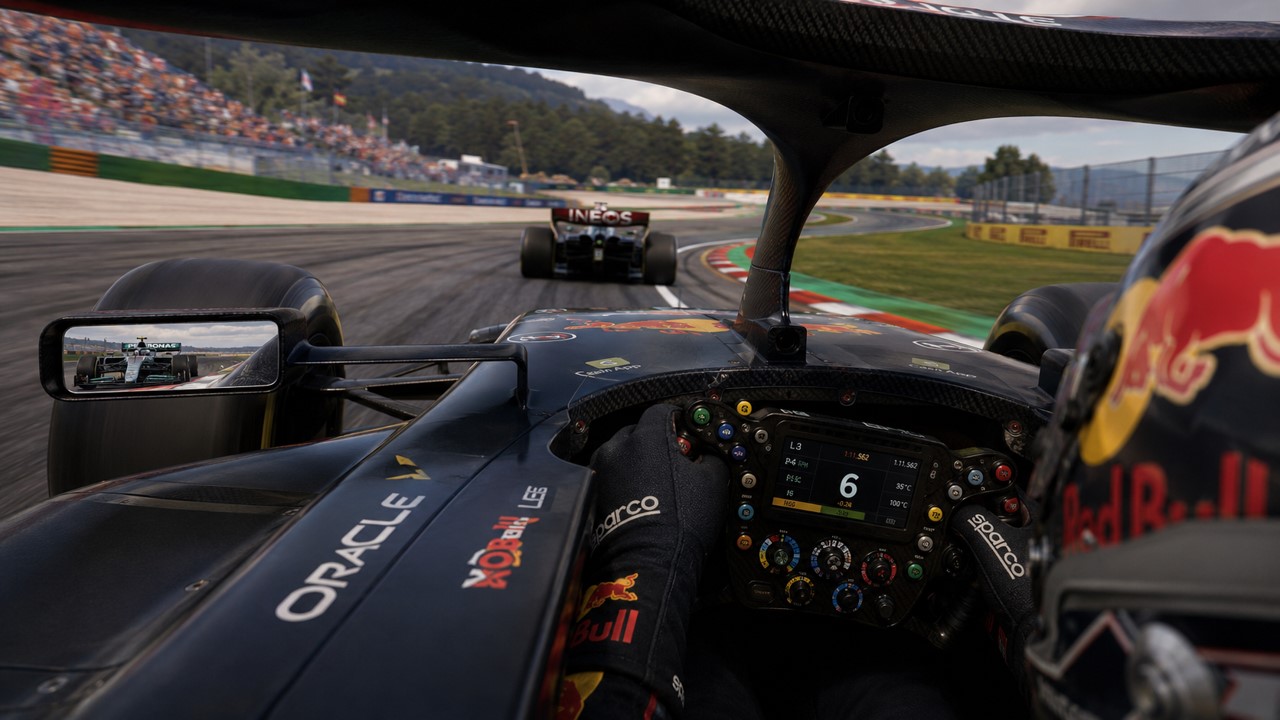
A Formula 1 cockpit contains an enormous amount of information.
The track itself is changing continuously. The steering wheel displays data. Mirrors provide limited information about surrounding cars. Flags, lights, braking references, curb positions, tire behavior, radio instructions, and competitor movements all compete for relevance.
But trying to process everything equally would be inefficient.
Instead, attention is prioritized.
At one moment, the most important information may be:
A few seconds later, priority may shift toward:
The visual environment remains complex, but the driver's processing is selective.
The skill lies partly in knowing which information should dominate attention at each moment.
Experienced drivers do not encounter every corner as a new problem.
They already know:
This reduces the amount of information that needs to be interpreted from scratch.
Instead of asking, “What is happening here?” at every moment, the driver is often asking:
“How is this situation different from what I expected?”
Prediction allows the driver to compare incoming information against an existing expectation.
If the car ahead brakes earlier than expected, the discrepancy becomes meaningful.
If the rear steps out slightly more than usual, that change becomes relevant.
If track grip drops, the driver's internal model must be updated.
The driver is therefore not simply reacting to events. They are constantly comparing reality with prediction.
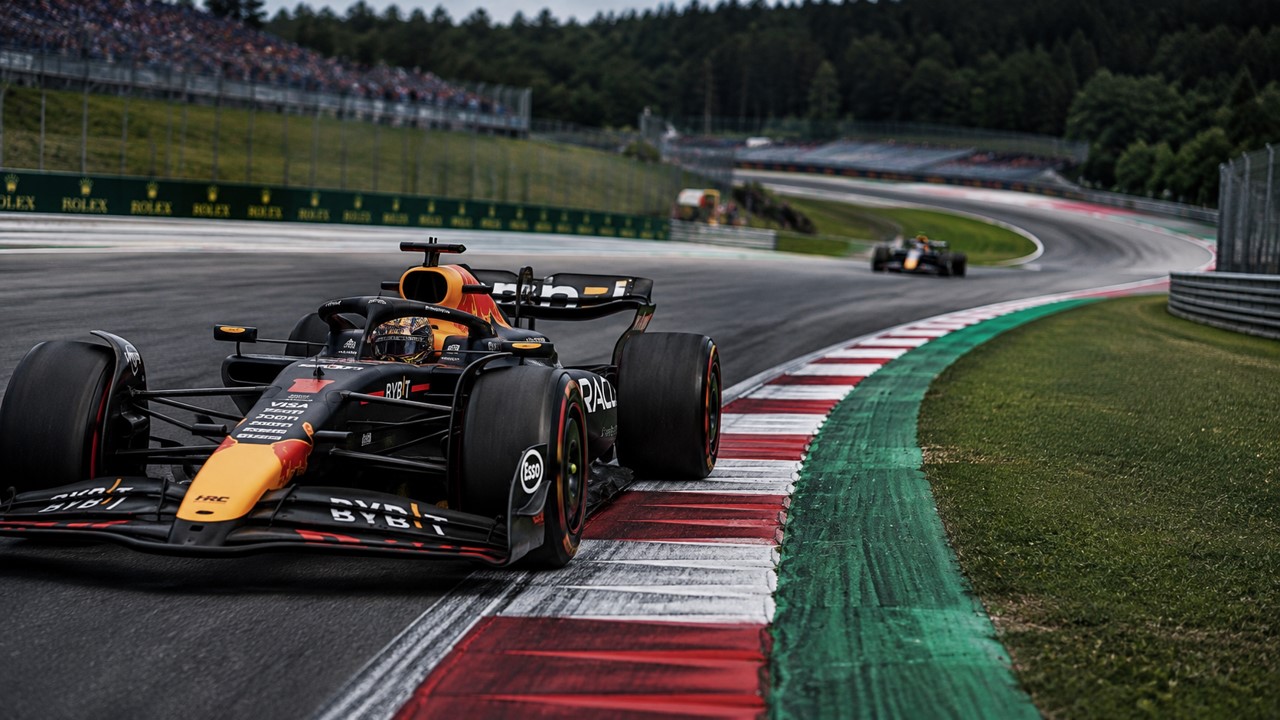
One of the clearest differences between novice and expert driving is where information is gathered.
A novice tends to focus relatively close to the vehicle, while an expert looks farther ahead.
In Formula 1, this becomes more extreme. The driver must gather information about what is coming next while still completing the current action.
Through a corner, attention may already be shifting toward:
This means vision is continuously operating ahead of the vehicle.
The driver cannot afford to process only the immediate present.
The useful visual field includes both what is happening now and what is about to matter next.
From television, corners can look like individual challenges.
Brake - turn - accelerate - repeat.
In reality, each corner affects the next one.
A slightly compromised entry changes the exit.
A poor exit changes speed along the following straight.
That changes overtaking possibilities, braking position, and the next corner's approach.
The race is therefore processed as a continuous sequence rather than a set of isolated actions. This makes situational awareness essential.
The driver is continuously updating:
The important information is distributed across time.
What happened several seconds ago may still influence what can be done several seconds later.
Formula 1 is not a quiet decision-making environment.
Drivers experience high physical forces, noise, heat, vibration, sustained muscular effort, and repeated braking loads while still processing the race.
That matters because cognitive and physical demands occur simultaneously.
The driver must continue to:
while the body is already working hard.
This makes Formula 1 a useful example of performance under combined demand. The cognitive task does not pause while the physical task becomes difficult.
Both continue together.
Radio messages create another interesting layer.
The driver may receive information about:
But the message arrives while the driver is already processing the race.
Its usefulness therefore depends partly on timing. A message delivered on a straight may be easy to integrate. The same message delivered during a complex corner sequence may compete with information that is more immediately important.
This illustrates a broader principle:
more information is not automatically useful simply because it is available.
Information becomes useful when it arrives at a moment when it can be interpreted and integrated without disrupting more important processing.
The remarkable thing about Formula 1 is not simply that drivers react quickly.
They continuously reduce an overwhelmingly complex environment into a manageable sequence of relevant information.
They predict.
They prioritize.
They compare expectation with reality.
They look ahead.
They maintain awareness of information that is not immediately central.
And they repeatedly update their understanding as the race changes around them.
That is what allows performance to remain organized at speeds where waiting for certainty would often mean acting too late.
Formula 1 is an extreme example, but the underlying cognitive challenge is familiar.
In many high-performance environments, success depends less on seeing everything and more on identifying what matters soon enough to act.
Speed makes this easier to see because the cost of delayed processing becomes obvious.
At 300 km/h, there is very little room for information that arrives too late, attention directed toward the wrong place, or a decision that begins only after the situation has fully unfolded.
Elite drivers do not process the race by reacting to one event at a time.
They stay ahead of it by continuously building, testing, and updating what they expect to happen next.
Welcome to the Research and Strategy Services at in today's fast-paced.
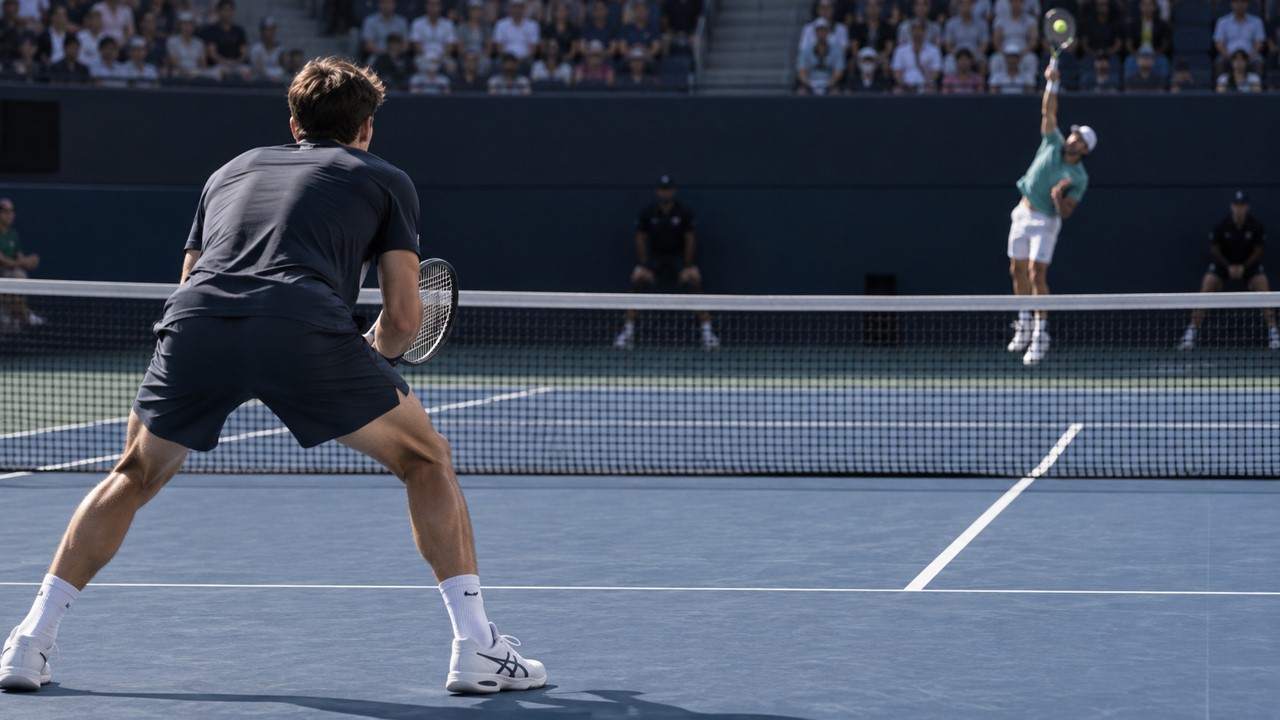
Elite tennis returners do more than react quickly — they extract useful information before the ball is even struck. This article explores how anticipation, body cues, and rapid updating help players solve the return before the serve fully unfolds.
Elite athletes don’t need to look directly at everything to stay aware of a fast-changing play. This article explores how gaze and attention work together to monitor movement, spacing, and opportunity across the wider visual field.
Learn how modern sports medicine extends beyond treating isolated injuries with multidimensional rehabilitation approaches.
NeuroTracker is one of the most widely researched cognitive training systems, used in elite sports, military, and human performance settings worldwide. Built on 20 years of neuroscience research.