

Welcome to the Research and Strategy Services at in today's fast-paced.
Watch an elite defender in football, a tennis player returning serve, or a fighter striking a punch and it can look as though they are reacting almost impossibly fast.
The natural explanation is that elite athletes simply have quicker reflexes. Sometimes reaction speed does matter, but it is only part of the story. In many high-speed situations, waiting until an opponent’s action is fully visible would already be too late.
Experts gain an advantage earlier. They learn to extract information from the movement that comes before the decisive action: changes in posture, weight transfer, limb coordination, body orientation, rhythm, and the way several parts of the body begin moving together.
What looks like an exceptionally fast reaction is often a prediction that started before the action was complete.
Imagine a football defender facing an attacker one-on-one. If the defender waits until the attacker has completely changed direction before responding, the attacker already has an advantage. By the time the movement is unmistakable, momentum has shifted and the space available to recover has narrowed.
The same problem appears across many sports. A tennis returner cannot wait for a fast serve to become fully readable in flight, it must be predicted from human movements cues of the serve execution.
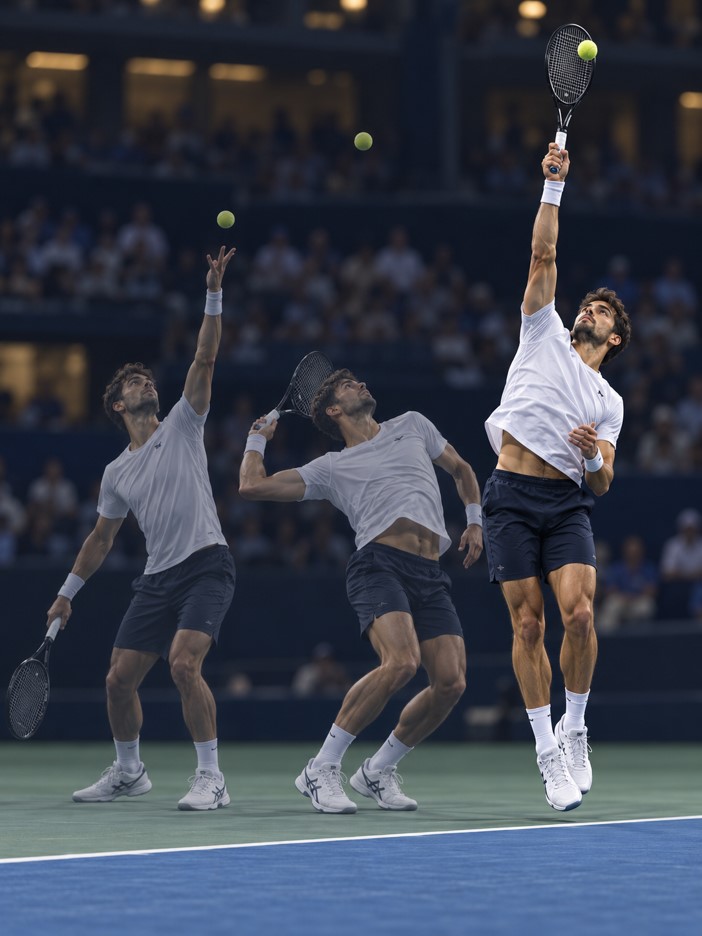
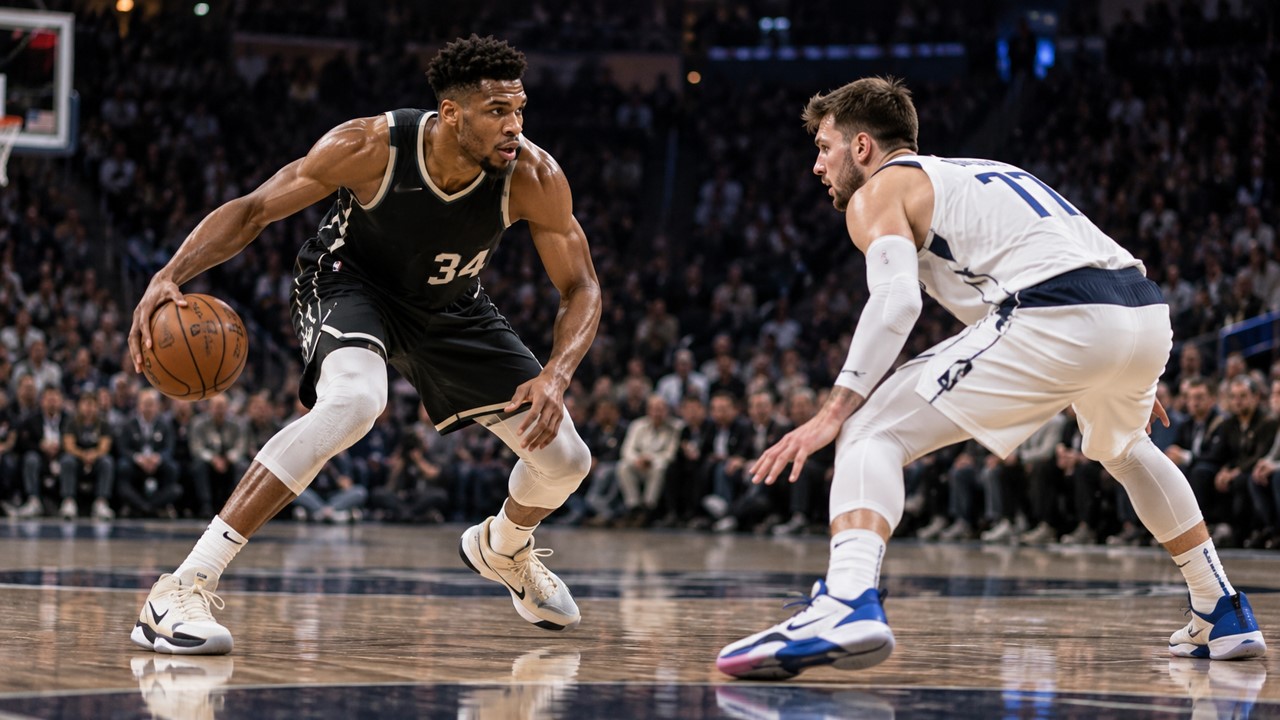
Similarly, a basketball defender cannot wait until an opponent has completed a drive before moving, and a goalkeeper cannot always wait for the ball to leave the foot before beginning to make a penalty save.
In each case, the athlete has to act while some uncertainty remains. The challenge is not simply to respond quickly after something happens, but to reduce uncertainty about what is likely to happen next.
Human movement develops over time. A kick, throw, sprint, cut, serve, or punch is not created in a single instant.
Before the final action appears, the body is already changing. Weight shifts. The hips rotate. The shoulders turn. One leg begins loading while another becomes free to move. The relationship between the trunk and limbs changes as force is prepared and redirected.
These changes provide information.
A football player preparing to cut left may begin shifting body mass before the foot actually changes direction. A tennis server may reveal useful information through the toss, trunk rotation, shoulder position, and developing racket path. A basketball player preparing to drive may alter stance, rhythm, and weight distribution before accelerating.
None of these cues necessarily provides certainty on its own. Their value comes from the pattern they form together.
This is where biological motion perception becomes important.
The visual system is highly sensitive to the coordinated movement of living bodies. We do not need to examine every joint independently to recognize that someone is walking, running, preparing to jump, or changing direction. Instead, the brain can extract meaningful structure from the way different parts of the body move in relation to one another.
This can be demonstrated using point-light displays, where a person is represented only by small lights placed at major joints. When those points move together, observers can often recognize surprisingly rich information about the action despite seeing almost none of the person’s normal appearance.
A particularly striking demonstration of this principle appears in the sports documentary Cristiano Ronaldo: Tested to the Limit. In one sequence, Ronaldo’s visual and perceptual skills are challenged under progressively reduced visual information, showing how much useful structure an elite athlete can extract from movement even when the scene becomes highly constrained. It is a compelling example of the broader point here: experts are not simply seeing more detail, but learning to extract more meaning from the movement information that remains available.
For sport, this matters because useful information may be carried by the evolving relationship between the feet, knees, hips, shoulders, arms, and trunk. An expert does not need a perfect visual picture of the opponent. The movement pattern itself can begin to indicate what is developing.
This makes biological motion perception especially useful for understanding anticipation. The athlete is not simply watching where an opponent is. They are interpreting what the opponent’s movement is becoming.
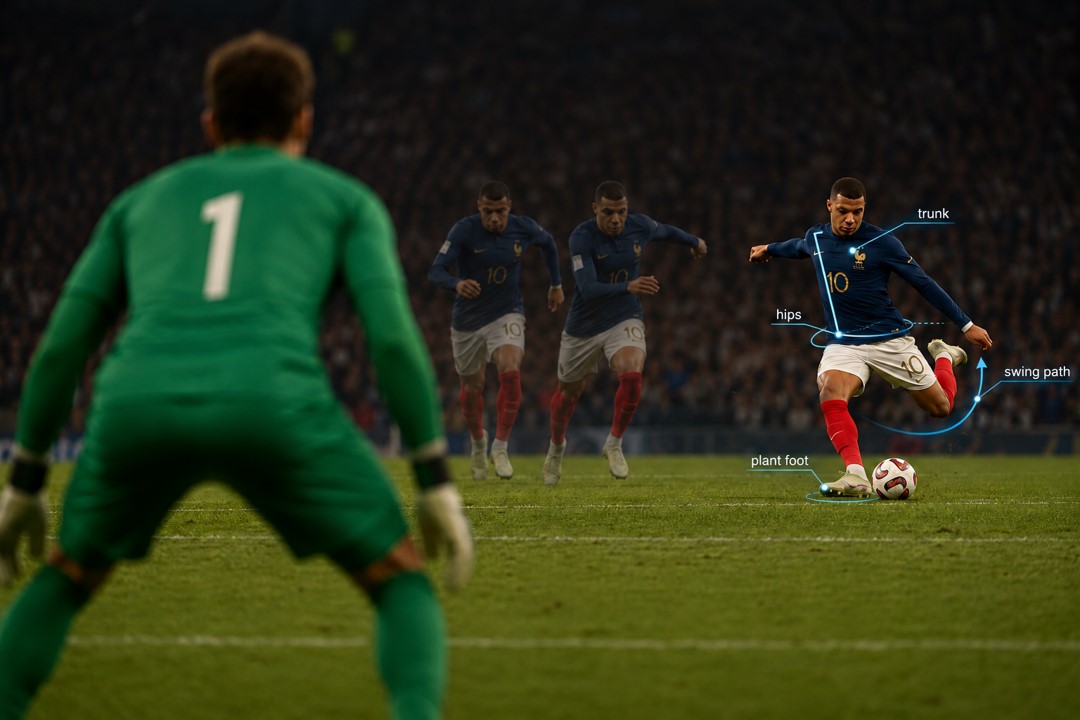
A beginner and an expert can watch exactly the same movement but extract very different information from it.
The beginner may notice the obvious outcome only when it becomes clear: the player cuts left, the serve goes wide, the punch begins, the pass is released. An experienced athlete may detect meaningful changes earlier because years of exposure have taught them which patterns tend to precede particular actions.
This does not mean experts consciously calculate every body angle. Much of this processing can become rapid and largely implicit. Repeated experience links certain movement patterns with likely outcomes until those relationships become increasingly familiar.
Expertise therefore changes what information becomes useful. A subtle shift that looks insignificant to a novice may meaningfully alter an expert’s expectation about what will happen next.
Anticipation is sometimes described as guessing, but that understates what is happening.
A guess can be arbitrary. Prediction uses available evidence to change the likelihood of different possibilities.
A defender may not know with certainty which way an attacker will move, but body position and movement history may make one direction more probable. A tennis player may not know exactly where the serve will land, but the server’s movement may narrow the likely options. A fighter may not know which punch is coming, but changes in stance and shoulder motion can make some actions more likely than others.
Even an imperfect prediction can be useful if it allows the athlete to begin preparing sooner. The response can then be revised as better information becomes available.
In this way, expert anticipation is not prediction instead of reaction. It is prediction giving reaction a head start.
If body movement provides predictive information, it also creates an opportunity for deception.
A good fake works by producing early cues that suggest one action while delaying or redirecting the actual outcome. A football attacker shapes the body as though moving one way and then cuts another. A basketball player uses a shoulder or eye fake. A fighter disguises one attack inside the preparation for another.
These actions exploit the same predictive system that normally helps the defender.
The better an athlete becomes at reading movement, the more important it may become for an opponent to control the information their own movement reveals. At elite levels, competition is therefore partly about action and partly about information.
One athlete is trying to read the movement early enough to reduce uncertainty. The other is trying to keep that uncertainty alive for as long as possible.
Early information is useful, but committing too strongly to it can also create mistakes.
If a defender assumes the first cue must reveal the final action, a convincing fake can pull them out of position. Skilled anticipation therefore involves continual updating rather than one irreversible prediction.
The athlete forms an expectation, watches how the movement develops, and adjusts as new information appears. A possible action becomes more likely or less likely as the body continues to move.
This process can happen extremely quickly, but the principle is simple: prediction remains provisional until the available evidence becomes stronger.
That flexibility is one reason elite anticipation can look so smooth. The athlete is not repeatedly starting from zero. They are continuously refining an evolving interpretation of what the opponent is likely to do.
Fast reactions are valuable, but they do not solve the full problem.
If two athletes begin processing the decisive information at different times, the one who starts earlier may have a substantial advantage even if their basic reaction speeds are similar.
The expert advantage often comes from shifting the useful information window forward. Instead of waiting until the outcome is obvious, the athlete detects cues during the preparation for the action itself.
This changes how we interpret elite speed. The best performers may appear to react faster because, cognitively, they have already started before everyone else.
Sport provides an especially visible example of a broader feature of human perception: we constantly use incomplete information to predict what is likely to happen next.
Elite athletes become unusually skilled at this because their environments repeatedly force them to make decisions before certainty is available. Through experience, they learn which movement patterns are informative, which cues can be misleading, and how long they can wait before committing.
Biological motion perception helps explain why this is possible. The body continuously reveals information through coordinated movement, and experienced observers can learn to extract meaning from those changing patterns remarkably early.
So when an elite athlete seems to know what an opponent is about to do, the explanation is often not extraordinary reflexes.
They are reading the action while it is still becoming an action.
Welcome to the Research and Strategy Services at in today's fast-paced.
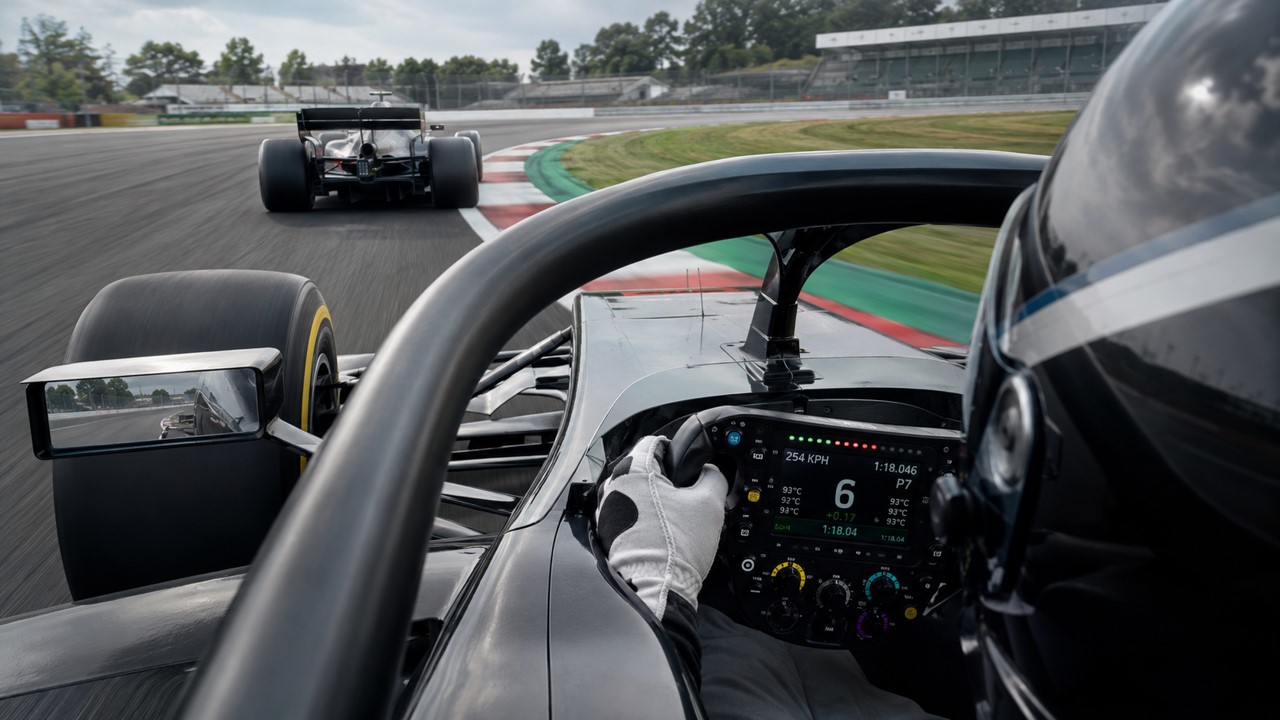
At Formula 1 speeds, performance depends on far more than fast reactions. This article explores how elite drivers prioritize information, anticipate what comes next, and continuously update the race at extreme speed.
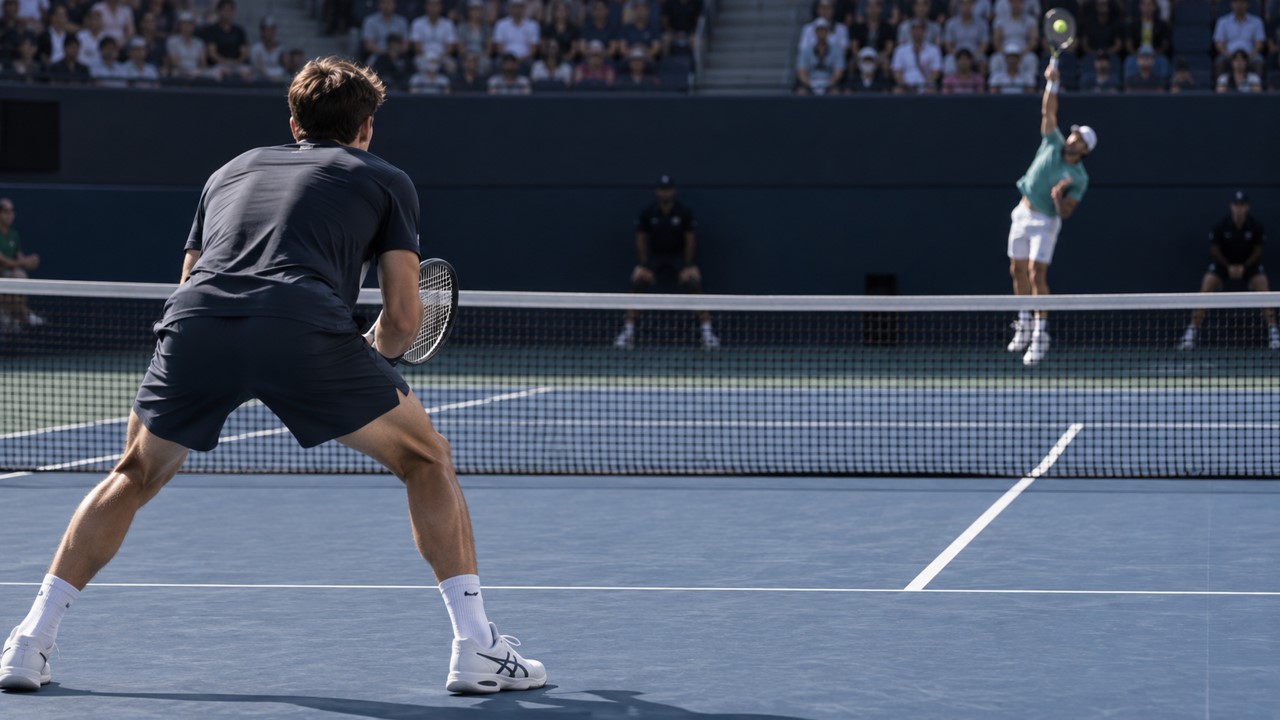
Elite tennis returners do more than react quickly — they extract useful information before the ball is even struck. This article explores how anticipation, body cues, and rapid updating help players solve the return before the serve fully unfolds.
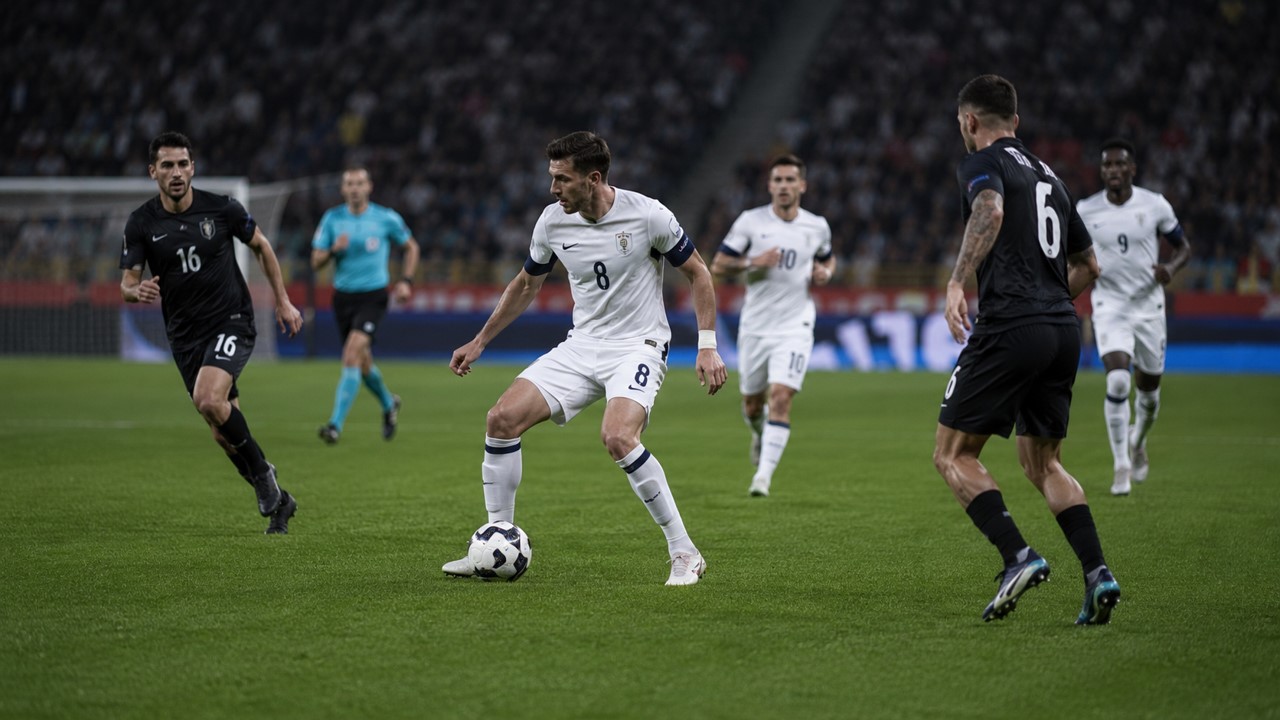
Elite athletes don’t need to look directly at everything to stay aware of a fast-changing play. This article explores how gaze and attention work together to monitor movement, spacing, and opportunity across the wider visual field.
NeuroTracker is one of the most widely researched cognitive training systems, used in elite sports, military, and human performance settings worldwide. Built on 20 years of neuroscience research.