

Welcome to the Research and Strategy Services at in today's fast-paced.
Most people think of difficult decisions as large, important moments.
Choosing a career path. Making a financial commitment. Deciding whether to move, change jobs, or take a major risk.
But many days are not dominated by one large decision. Instead, they are filled with dozens of small ones.
What to answer first. Which task to prioritize. Whether to respond now or later. Which route to take. Which option to select. Whether something is important enough to revisit.
Individually, these decisions often feel insignificant. But over time, something changes.
Simple choices begin to feel slower. Clear priorities become harder to maintain. Small interruptions seem to carry more weight than they should.
The common assumption is that each small decision remains small on its own. But decisions do not occur in isolation.
A single low-stakes decision rarely feels demanding.
Most are resolved quickly and automatically.
Because of this, it is easy to assume that many small decisions should remain easy as well.
Each one appears manageable:
None of these choices seem especially important by themselves.
But each decision still requires:
As these moments accumulate, the structure of the environment changes.
The issue is not that one decision becomes overwhelming.
It is that the number of active decision points continues to grow.

Every decision changes the informational landscape around the next one.
Some options disappear. Others remain unresolved. New inputs continue arriving while earlier decisions still influence what happens next.
As a result:
This creates a progressively more complex decision environment.
Importantly, the difficulty does not come only from the size of the decisions themselves.
It comes from the ongoing need to:
The environment becomes increasingly layered with unfinished or competing pathways.
Even when each individual choice is small, the accumulated structure can become difficult to manage clearly.

This process usually does not feel dramatic.
There is rarely a single moment where the environment suddenly becomes unmanageable.
Instead, the shift is gradual.
For example:
Over time, decision-making becomes less about any one choice and more about maintaining structure across many simultaneous demands.
The person is no longer responding to isolated decisions.
They are navigating an increasingly dense network of partially active ones.

Digital environments
A person responding to emails, messages, notifications, and task reminders may constantly reopen small decision loops throughout the day. Individually, each interaction is manageable. Together, they create a continuously shifting decision environment.
Workplace multitasking
Managing multiple ongoing tasks often means holding partial decisions across different contexts at once. Priorities must repeatedly be re-evaluated as new information arrives.
Driving
Heavy traffic involves many small continuous decisions rather than one large one—spacing, lane positioning, timing, signaling, navigation, and responding to surrounding movement all stack together over time.
Parenting and caregiving
Many rapid low-level decisions may occur simultaneously: scheduling, monitoring, responding, organizing, and adapting to changing situations throughout the day.
Sports performance
Athletes often manage repeated micro-decisions about positioning, timing, spacing, and movement while the environment continues changing around them in real time.
The challenge created by many small decisions is not simply the number of choices.
It is the accumulation of active pathways, unresolved possibilities, and continuously changing priorities around them.
As decisions stack up:
The difficulty emerges from the growing complexity of the decision environment itself.
Small decisions rarely feel important in isolation.
But real-world environments are not built from isolated moments.
They are built from overlapping sequences of choices, interruptions, updates, and unresolved possibilities that continue interacting over time.
What becomes difficult is not necessarily deciding once.
It is maintaining clarity while many decisions remain active at the same time.
Welcome to the Research and Strategy Services at in today's fast-paced.
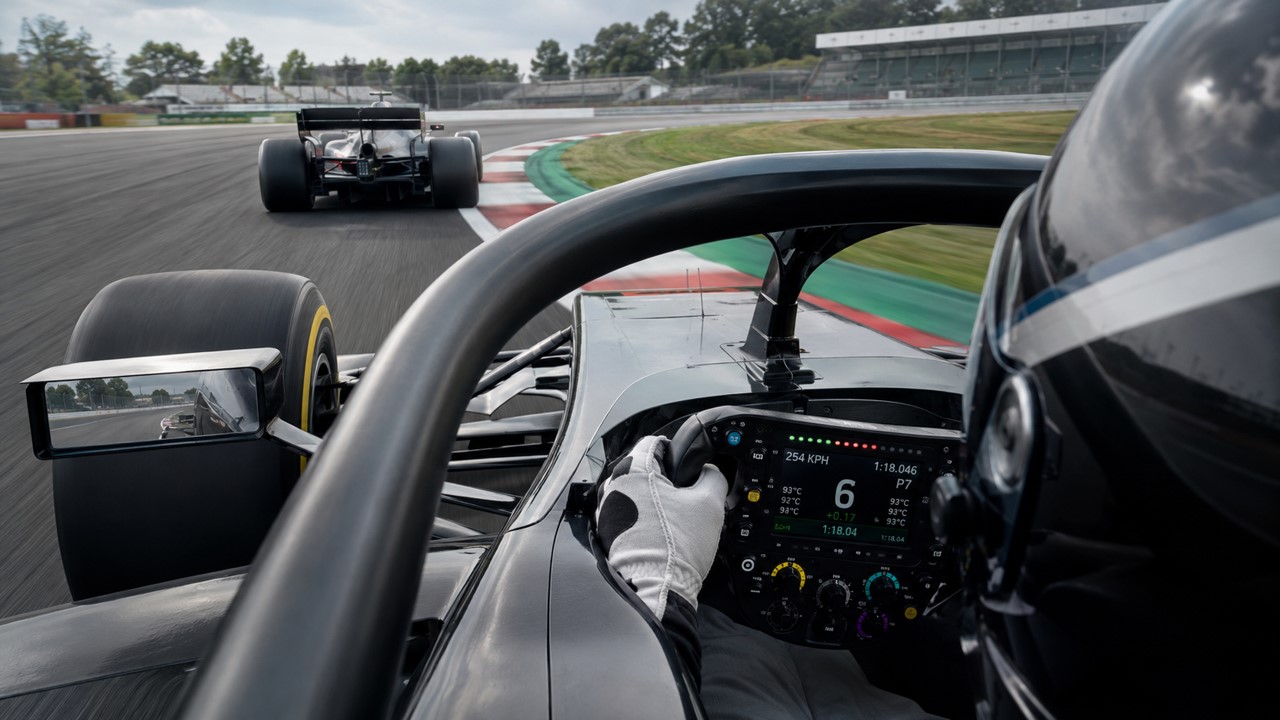
At Formula 1 speeds, performance depends on far more than fast reactions. This article explores how elite drivers prioritize information, anticipate what comes next, and continuously update the race at extreme speed.
Elite tennis returners do more than react quickly — they extract useful information before the ball is even struck. This article explores how anticipation, body cues, and rapid updating help players solve the return before the serve fully unfolds.
Elite athletes don’t need to look directly at everything to stay aware of a fast-changing play. This article explores how gaze and attention work together to monitor movement, spacing, and opportunity across the wider visual field.
NeuroTracker is one of the most widely researched cognitive training systems, used in elite sports, military, and human performance settings worldwide. Built on 20 years of neuroscience research.