

Welcome to the Research and Strategy Services at in today's fast-paced.
Penalty kicks are often described as a test of nerve.
For the penalty taker, that is clearly true. One player, one ball, one goalkeeper, one moment. But from the goalkeeper’s perspective, a penalty is not simply a psychological duel. It is also a perceptual problem, because by the time the shot is fully readable, the goalkeeper may already be too late.
This is why penalty saves are not just about reaction time. They are about anticipation.
More specifically, they are about the goalkeeper’s ability to predictively read the penalty taker’s body before the ball is struck.
The goalkeeper’s disadvantage begins with the geometry of the penalty kick.
The ball is placed 12 yards from goal — about 10.97 meters. At elite levels, a hard penalty can travel roughly 25–35 meters per second, depending on technique, placement, and how much the player prioritizes power over accuracy.
That means the ball can reach the goal in approximately:
Even a less powerful penalty can arrive in under half a second.
For the goalkeeper, this is a brutal time constraint. Research has estimated that a goalkeeper may need around 200 milliseconds simply for visual reaction, plus roughly 700 milliseconds to complete the movement needed to reach the side of the goal. In practical terms, the full response can require close to 900 milliseconds.
The ball often arrives in less than half that time.
This is why penalty saves are so difficult. World Cup data shows the scale of the challenge: penalties in normal and extra time have historically been scored at close to 80%, while World Cup shootout penalties are converted at just under 70%. Goalkeepers can and do produce extraordinary saves, but statistically the taker holds the advantage.
The timing problem also explains why prediction is so critical.
If a goalkeeper waits until the ball’s final direction is completely clear, it may already be too late to reach a well-placed shot. To have a realistic chance, the goalkeeper often has to begin preparing — and sometimes moving — before or at the moment of foot-to-ball contact.
That does not mean goalkeepers are simply guessing.
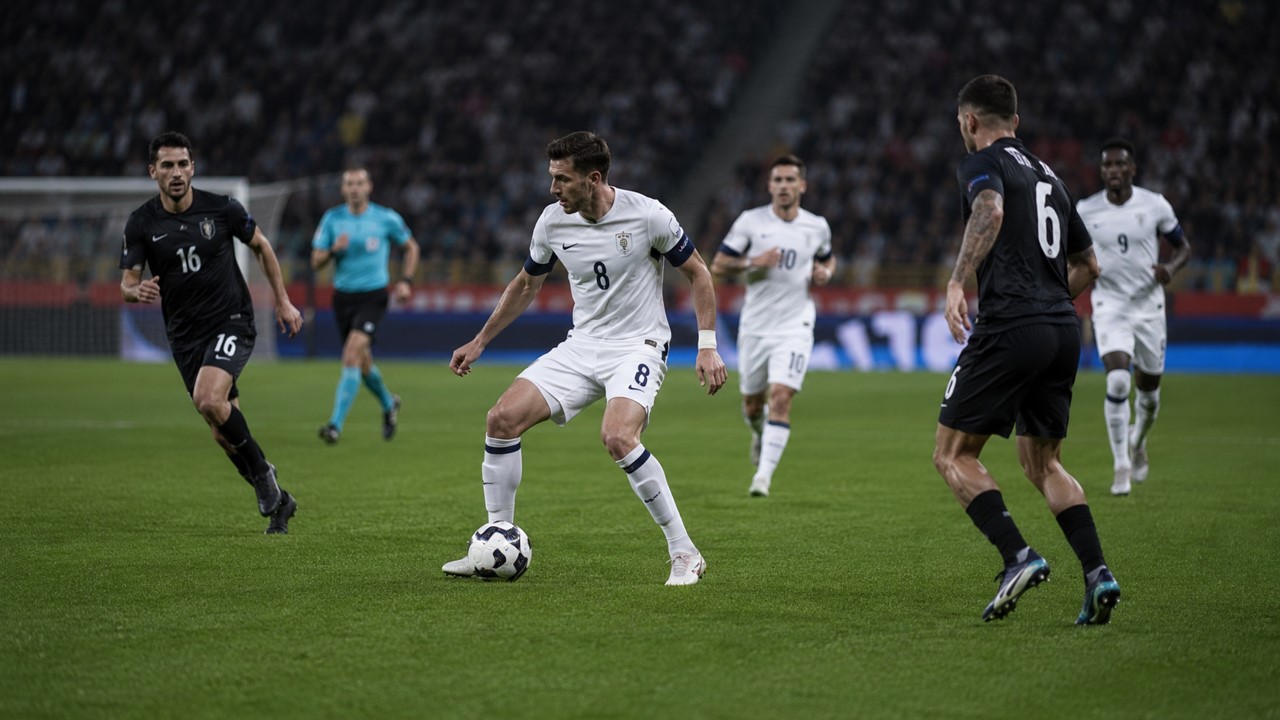
It means they are trying to make an informed prediction from the best available cues: the taker’s approach, hips, trunk, support foot, kicking-leg swing, rhythm, and timing. The save begins before the ball moves.
A goalkeeper facing a penalty has to make a decision under extreme uncertainty.
Dive left, dive right, stay central, delay movement, commit early, wait longer, read the run-up, watch the hips, track the support foot, monitor the kicking leg, ignore deception, and remain ready for a last-second change.
All of this happens in a compressed window of time.
The goalkeeper cannot process the penalty like a slow visual scene. They must extract useful information quickly, decide what matters, and act before the ball has fully revealed its path.
That is why the science of penalty saving is so interesting. It shows how elite performance depends on perception before action.
One of the most important concepts here is biological motion perception.
Biological motion perception is the ability to interpret human movement from dynamic visual information. In football, this means reading the coordinated movement of the penalty taker’s body: the approach, trunk angle, hip rotation, support-foot placement, kicking-leg swing, rhythm, and timing.
A goalkeeper is not only watching the ball.
They are watching the body that produces the ball’s movement.
Research on penalty anticipation has shown that observers can use information from the kicker’s body before ball contact to predict shot direction. Importantly, this information does not appear to come from one isolated body part alone. The useful signal may be distributed across multiple body segments.
This makes intuitive sense. A penalty kick is a whole-body action. The final shot is shaped by the approach, balance, posture, plant foot, pelvis, trunk, and kicking leg working together. The goalkeeper’s perceptual task is to detect patterns in that movement early enough to respond.
In other words, the goalkeeper is trying to read intention through motion.
Reaction time matters, but it is not the whole story.
If the goalkeeper waits until after the ball is struck, the available response time can be extremely limited. At elite speeds, a purely reactive strategy may leave too little time to move far enough across the goal.
This is why goalkeepers often appear to “guess.”
But expert anticipation is not random guessing. It is probabilistic prediction.
A goalkeeper may not know exactly where the ball will go, but they may detect cues that increase the likelihood of one outcome over another. A slight change in body angle, a longer stride, a more open hip position, or a different support-foot placement may shift the probability of a shot going one way.
The best goalkeepers are not trying to be certain.
They are trying to be early enough, based on the best available information.
Of course, the penalty taker knows this.
At elite levels, penalty kicks are not only about striking technique. They are about disguise.
A taker may try to delay information, manipulate body shape, alter run-up rhythm, use a stutter step, open the hips late, or wait for the goalkeeper to move first. Some players use a power-based strategy, where the aim is to strike the ball with enough speed and accuracy that the goalkeeper has little chance even if they anticipate correctly. Others use a goalkeeper-dependent strategy, where the taker watches the goalkeeper and adapts the shot direction late.
This creates a perceptual duel.
The goalkeeper tries to extract useful information as early as possible.
The taker tries to make that information unreliable for as long as possible.
This is one reason penalties remain so compelling. They look simple, but underneath the surface they involve perception, deception, timing, pressure, and decision-making in a very small time window.
Research on goalkeeper anticipation has also examined visual search behavior.
Successful goalkeepers do not simply stare at the ball. They tend to use visual strategies that help them pick up advance information from the penalty taker’s movement. This may include looking at areas such as the kicking leg, non-kicking leg, hips, trunk, or the relationship between these body segments.
The exact “best” visual strategy may depend on the kicker, the goalkeeper, and the moment. But the broader principle is clear: where the goalkeeper looks affects what information they can use.
Too much focus on one local cue may miss the larger movement pattern. Too broad a focus may dilute the most useful information. The challenge is to attend to the right information at the right time.
This is where penalties become a fascinating example of expert visual cognition.
The goalkeeper is not passively seeing the action. They are actively sampling information from a moving human body and using it to support a high-speed decision.
Penalty kicks are also shaped by pressure.
Research on pressure in penalties often focuses on the taker, revealing that anxiety can change where players look, how they aim, and how they execute the shot. Studies have shown that anxious penalty takers may fixate more on the goalkeeper, which can pull attention away from optimal scoring zones and reduce shooting accuracy.
From the goalkeeper’s perspective, this matters.
The goalkeeper is not only trying to save the shot. They may also be trying to become visually and psychologically present enough to influence the taker’s attention.
This does not mean gamesmanship is the whole story. But it does highlight an important point: penalties are interactive. The goalkeeper’s posture, timing, movement, and presence can alter the information environment for the taker.
A goalkeeper who delays movement may force the taker to commit. A goalkeeper who moves early may invite the taker to adapt. A goalkeeper who appears large, active, or unpredictable may draw attention at the wrong moment.
In penalties, perception works both ways.
This is not unique to football.
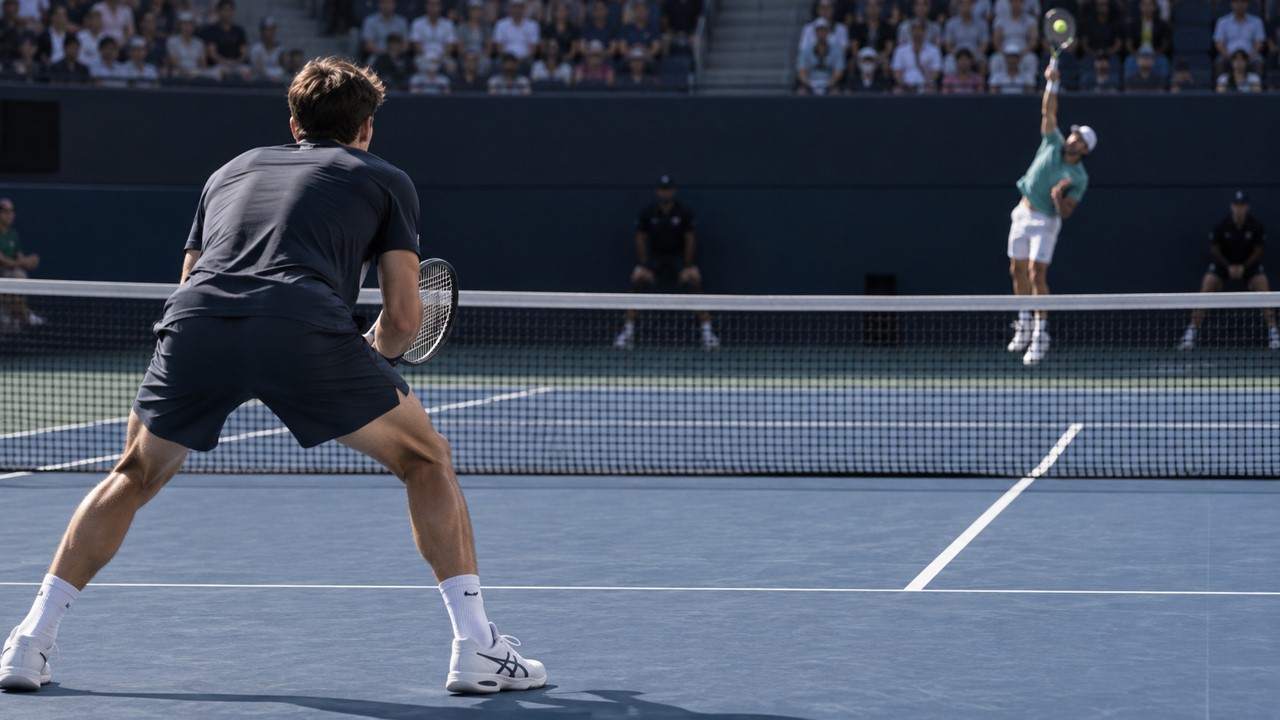
In tennis, expert returners use information from the server’s body before the ball is fully readable. In baseball and cricket, hitters rely on advance kinematic cues from the pitcher or bowler because waiting for the object’s full trajectory is often too late.
Penalty kicks sit within the same family of high-speed perceptual problems: the body reveals information before the ball does.
The goalkeeper’s task is similar to the tennis returner or baseball hitter in one important respect. They must use early movement information to predict an outcome that will soon unfold too quickly for reaction alone.
This is why biological motion perception is such a powerful lens for understanding penalties. It shifts the focus from “Can the goalkeeper react fast enough?” to “Can the goalkeeper read the action early enough?”
A major question in sports science is whether expert athletes see more information, see the same information differently, or know better which information matters.
For penalty kicks, the answer is likely a combination.
Expert goalkeepers may be better at identifying reliable cues, ignoring misleading cues, using body information probabilistically, and timing their movement based on the unfolding action. They may also have richer experience with different shooting styles, allowing them to interpret subtle variations in the taker’s movement.
This does not make penalties predictable.
Even the best goalkeeper cannot know with certainty where a well-disguised penalty will go. But expertise may improve the odds. A small perceptual advantage can matter when the decision window is so short.
In elite sport, performance is often decided by small margins.
Penalty saving is a clear example.
This leads to an important question.
If goalkeepers rely on biological motion perception, can this type of body-reading ability be trained?
The direct football evidence is still limited. Penalty anticipation is highly specific, however, related research suggests the question is worth asking.
In healthy older adults, NeuroTracker training signifcantly improved 3D biological motion perception — the ability to interpret human movement from dynamic visual information. This study was not conducted with athletes, but it does suggest that biological motion perception might be improvable through perceptual-cognitive training.
There is also a sport-specific hint from professional baseball. In one study, NeuroTracker training was associated with improved hitting outcomes for non-fastball pitches, such as curveballs and sliders. These pitch types place heavy demands on complex motion processing, timing, and anticipation. This does not show transfer to penalty saving or biological motion perception in goalkeepers. But it provide a sports example where perceptual-cognitive training appeared to transfer to real-world performance demands involving dynamic prediction.
These tentatively suggest the possibility that the perceptual skills behind reading and predicting human movement may be trainable, but more specific research is needed in this area.
Penalty kicks are not just a contest between shooter and goalkeeper.
They are a contest between action and perception.
For the goalkeeper, the ball is only part of the story. Long before the shot reaches the goal, the taker’s body may already be revealing useful information. The challenge is to detect that information, interpret it correctly, resist deception, and move early enough to matter.
That is what makes penalty saving one of the clearest examples of perceptual expertise in football.
At the highest level, goalkeepers are not only reacting to shots - they are reading human movement under pressure.
Welcome to the Research and Strategy Services at in today's fast-paced.
Pilots don’t just control where the aircraft is — they continuously anticipate where it is heading next. This article explores how prediction, workload management, and future-state awareness help pilots stay ahead of the aircraft.
Elite tennis returners do more than react quickly — they extract useful information before the ball is even struck. This article explores how anticipation, body cues, and rapid updating help players solve the return before the serve fully unfolds.
Elite athletes don’t need to look directly at everything to stay aware of a fast-changing play. This article explores how gaze and attention work together to monitor movement, spacing, and opportunity across the wider visual field.
NeuroTracker is one of the most widely researched cognitive training systems, used in elite sports, military, and human performance settings worldwide. Built on 20 years of neuroscience research.