



Welcome to the Research and Strategy Services at in today's fast-paced.
Seeing a cognitive score change can feel significant.
A number goes down.
Or up.
Or fluctuates unexpectedly.
It’s natural to wonder:
But single scores rarely mean what we assume they mean.
Understanding how to interpret cognitive performance over time is far more important than reacting to individual results.
Cognitive assessments, whether formal or informal, measure performance at a specific moment.
That moment is influenced by:
Even small shifts in these variables can nudge performance slightly up or down.
This is normal.
A single data point cannot capture your cognitive capacity.
It captures your performance in context.
Understanding what normal cognitive variability looks like is essential to avoid drawing conclusions from isolated results.

Cognitive performance is dynamic.
Even under stable conditions, small fluctuations are expected because:
Two sessions one week apart are rarely identical internally — even if they look identical externally.
Minor variation is not instability.
It is regulation.
This is closely tied to the distinction between temporary cognitive state and underlying capacity, which explains why performance can vary even when ability has not changed.
When people expect progress, they often imagine a steady upward trend.
In reality, cognitive improvement usually looks more like:
Short-term dips do not erase long-term gains.
If the overall direction is stable or gradually improving, temporary declines are part of the process.
This distinction is critical.
Noise is:
Signal is:
Noise appears frequently.
Signal appears gradually.
Reacting to noise creates unnecessary anxiety.
Watching for signal builds perspective.
Repeated exposure to the same task can improve familiarity.
This doesn’t mean the score is meaningless — but it does mean:
Over time, pattern stability matters more than early spikes.

Scores can temporarily drop after:
If performance rebounds after recovery, this suggests state fluctuation — not structural change.
This is especially common in high performers who operate near capacity.
In many cases, apparent declines reflect temporary effects of cognitive load and incomplete recovery rather than meaningful changes in ability.
In a stable cognitive system, you’ll often see:
That pattern reflects adaptive regulation.
It may be worth deeper evaluation if you notice:
Context still matters — but persistent patterns deserve attention.
Your baseline is not your best score.
It is your typical range.
Many people anchor to their peak performance and interpret anything below it as decline.
But peak days are not the standard.
Range is.
If your performance stays within your typical range over time, that suggests stability — even if individual sessions feel different.
Meaningful interpretation requires time.
Ask:
Longer windows reveal signal.
Short windows amplify noise.
This is why performance should be interpreted across repeated measurements, rather than relying on single snapshots taken under specific conditions.
Instead of asking:
Why did my score drop?
Try asking:
This moves interpretation from reaction to analysis.
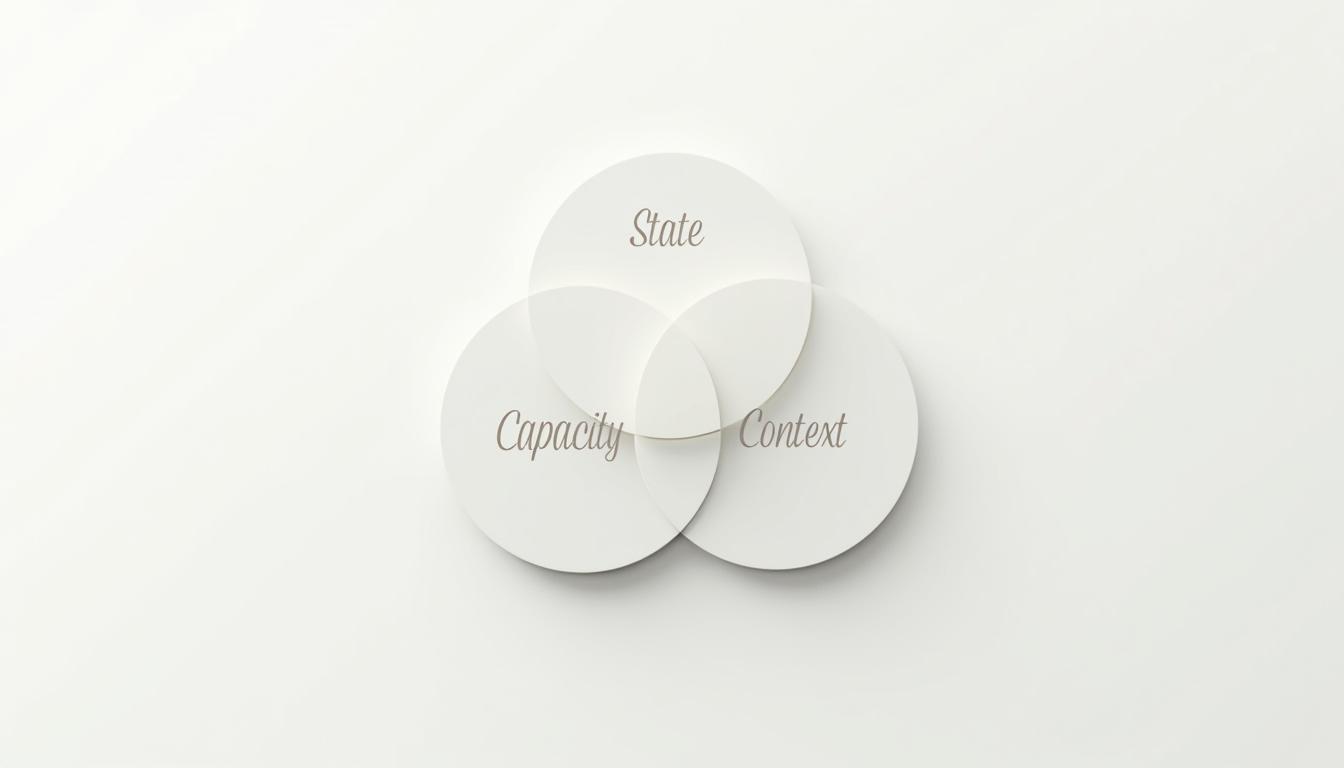
Performance is the output of:
Capacity × State × Context
If any of those shift, the number shifts.
The number is not your intelligence.
It is not your worth.
It is not a fixed trait.
It is a measurement in time.
Understanding that distinction prevents overinterpretation.
Cognitive performance is not meant to be static.
It is responsive.
Small fluctuations are expected.
Gradual change takes time.
Meaningful trends emerge across patterns.
Interpreting scores wisely requires patience.
The most important question is rarely:
What happened today?
It is more often:
What is happening over time?
Interpreting cognitive performance accurately requires separating signal from noise, and recognizing how context, state, and measurement conditions influence outcomes.
Welcome to the Research and Strategy Services at in today's fast-paced.
Longevity habits are easier to sustain when they become part of shared routines, relationships, and meaningful challenges. Social motivation, identity, feedback, and participation can help healthy behaviors become more durable over time.
Attention can become crowded long before it feels overloaded. This article explores how unfinished tasks, background priorities, and everyday demands can quietly occupy attention and shape performance.
Longevity is increasingly about more than living longer—it’s about preserving the capacity to live well for longer. This article explores why healthspan is becoming the practical focus of modern healthy aging.
NeuroTracker is one of the most widely researched cognitive training systems, used in elite sports, military, and human performance settings worldwide. Built on 20 years of neuroscience research.