


Welcome to the Research and Strategy Services at in today's fast-paced.
Most people assume that cognitive performance should be stable.
If you slept well, ate properly, and feel generally fine, your thinking should be consistent — right?
But real-world cognition doesn’t work that way.
You can feel sharp on Monday, slower on Wednesday, and clear again by Friday — without anything being “wrong.”
Understanding what normal cognitive variability looks like is one of the most important — and most overlooked — aspects of how our thinking actually works..
The brain is not a static system.
Attention, processing speed, working memory, and decision-making capacity fluctuate in response to:
Even in healthy individuals, performance shifts across hours, days, and weeks.
Stability is not the natural baseline.
Adaptation is.
This distinction is essential.
Variability means:
Decline means:
Most people experience variability.
True decline is far less common — and usually accompanied by consistent functional change.
We explore how this feels in practice in our article on why thinking can feel mentally slower than usual.
Cognitive shifts are noticeable because thinking is central to identity.
When performance feels different, even slightly, it draws attention.
This is especially true for people who:
Ironically, the more cognitively engaged someone is, the more sensitive they may be to normal fluctuations.

Several natural rhythms shape cognitive performance:
Alertness and executive function vary by time of day. Many people have predictable peaks and troughs.
In some cases, people improve sleep but still feel inconsistent focus — covered in more detail here.
Sustained mental effort reduces efficiency temporarily — even in high performers.
Stress and mood influence attentional stability and working memory.
Periods of intense demand often require longer recovery windows than expected.
None of these indicate impairment.
They reflect regulation.

Even in controlled environments, cognitive performance rarely produces identical results across sessions.
Why?
Because the nervous system is responsive, not fixed.
Factors such as:
can slightly shift performance thresholds.
This is why single data points are rarely informative.
Patterns matter more than moments.
Normal variability tends to show:
It often follows understandable rhythms.
You may notice:
These patterns suggest adaptive fluctuation — not dysfunction.

It may be helpful to look more carefully if:
In most cases, however, variability reflects system interaction — not system failure.
One of the most common misconceptions is:
“If I’m healthy, my cognitive performance should be consistent.”
But the brain optimizes for adaptation, not uniformity.
Expecting identical performance across days can:
Understanding variability reduces this pressure.
Instead of asking:
“Why wasn’t I as sharp today?”
It can be more helpful to ask:
This shifts the focus from alarm to observation.
Every individual has:
Movement within that range is normal.
What matters most is:
Healthy cognition is dynamic — not static.
Cognitive variability is not a flaw in the system.
It is a reflection of:
Recognizing this distinction prevents unnecessary alarm and supports more accurate interpretation of cognitive experiences.
If the question is:
“Is something wrong?”
It is often better to reframe it:
“Is this a fluctuation — or a trend?”
Understanding that difference is foundational to interpreting brain performance wisely.
Welcome to the Research and Strategy Services at in today's fast-paced.
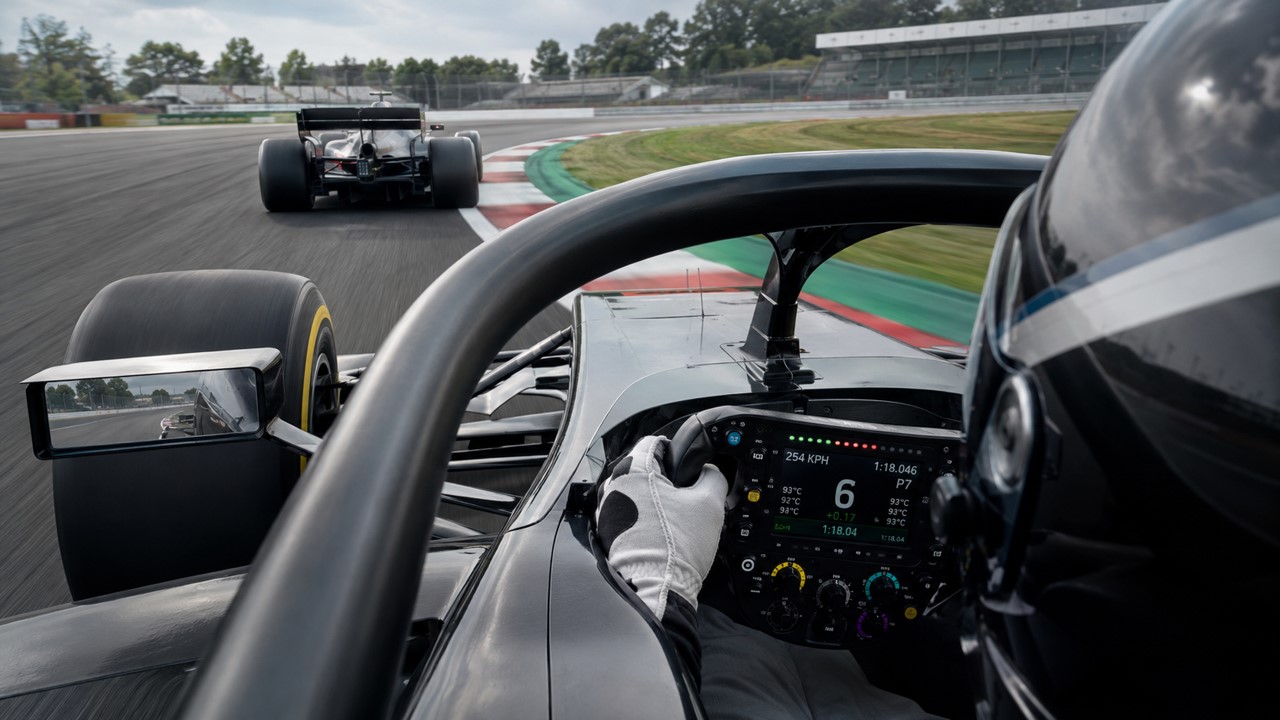
At Formula 1 speeds, performance depends on far more than fast reactions. This article explores how elite drivers prioritize information, anticipate what comes next, and continuously update the race at extreme speed.
Elite tennis returners do more than react quickly — they extract useful information before the ball is even struck. This article explores how anticipation, body cues, and rapid updating help players solve the return before the serve fully unfolds.
Elite athletes don’t need to look directly at everything to stay aware of a fast-changing play. This article explores how gaze and attention work together to monitor movement, spacing, and opportunity across the wider visual field.
NeuroTracker is one of the most widely researched cognitive training systems, used in elite sports, military, and human performance settings worldwide. Built on 20 years of neuroscience research.