

Welcome to the Research and Strategy Services at in today's fast-paced.
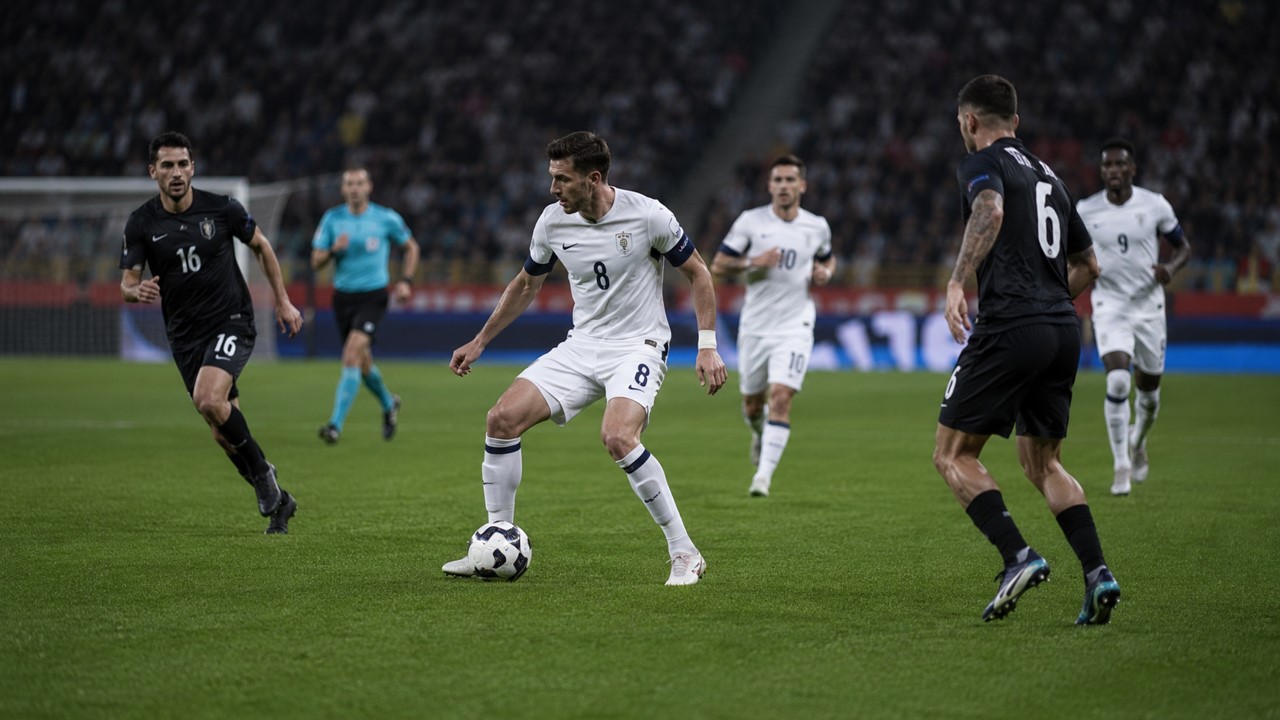
Watch an elite soccer player receive the ball in a crowded midfield and something interesting happens.
Their eyes may appear fixed on the ball or the opponent directly in front of them. Yet a moment later they pass into space occupied by a teammate who was nowhere near the center of their gaze.
It can look almost as though they saw everything at once, but they didn’t.
What skilled athletes become good at is using vision differently: keeping their gaze relatively stable while extracting specifically useful information from a much wider part of the scene.
That distinction between where you are looking and what you are attending to is fundamental to situational awareness in fast-moving sports.
Central vision is remarkably detailed. It is what allows us to read text, recognize faces, inspect the ball, and pick out fine visual information. But that detailed central region represents only a small portion of the wider visual field.
Around it lies peripheral vision.
Peripheral vision is less useful for identifying fine detail, but it remains highly sensitive to movement and changes in the surrounding scene. In dynamic environments, that makes it extremely valuable.
A soccer player looking toward the ball may simultaneously register:
The athlete is not examining each of these elements with detailed central vision.
Instead, attention is distributed across a larger visual area while the eyes remain anchored on information that is especially important.
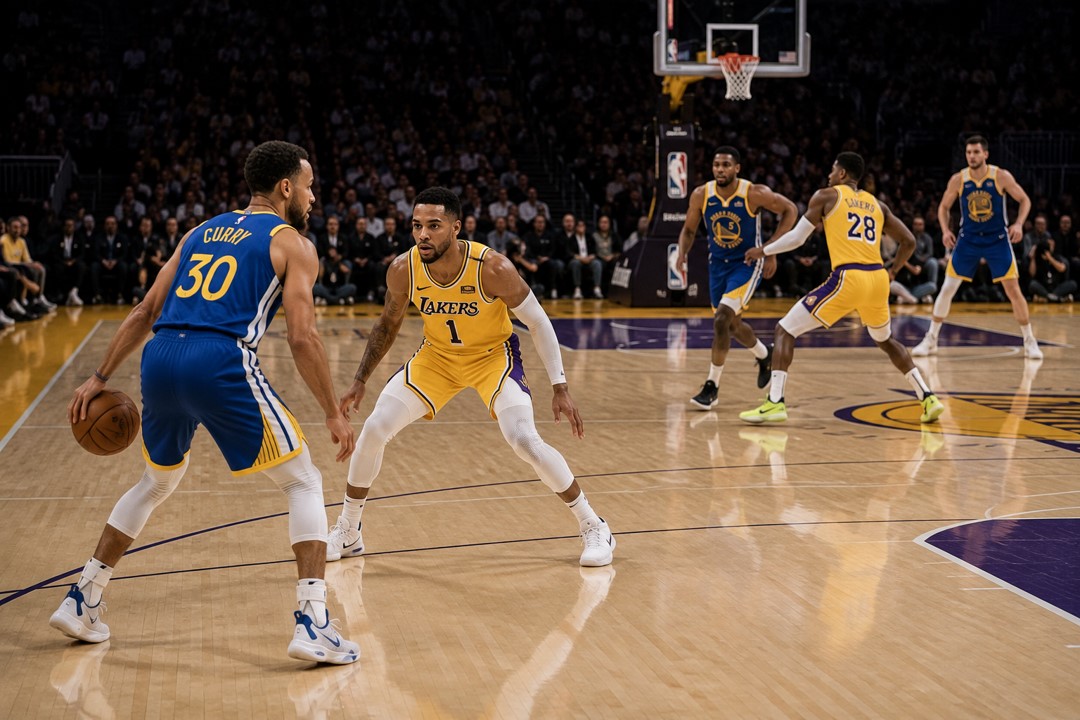
It seems intuitive that the best way to understand a complex scene would be to look directly at everything. But continually shifting gaze has a cost.
Every eye movement changes which part of the environment receives detailed central vision. During rapid gaze shifts, visual information is also briefly disrupted.
In a slow environment this may matter little. In elite sport, however, several meaningful changes can occur during the time it takes to repeatedly redirect the eyes. This creates a practical problem. The athlete needs information from across the field, but cannot inspect everything individually.
One solution is a more efficient visual strategy:
look directly at what matters most while using attention to monitor what is happening around it.
The result is not wider high-resolution vision. It is more effective use of the visual information already available.
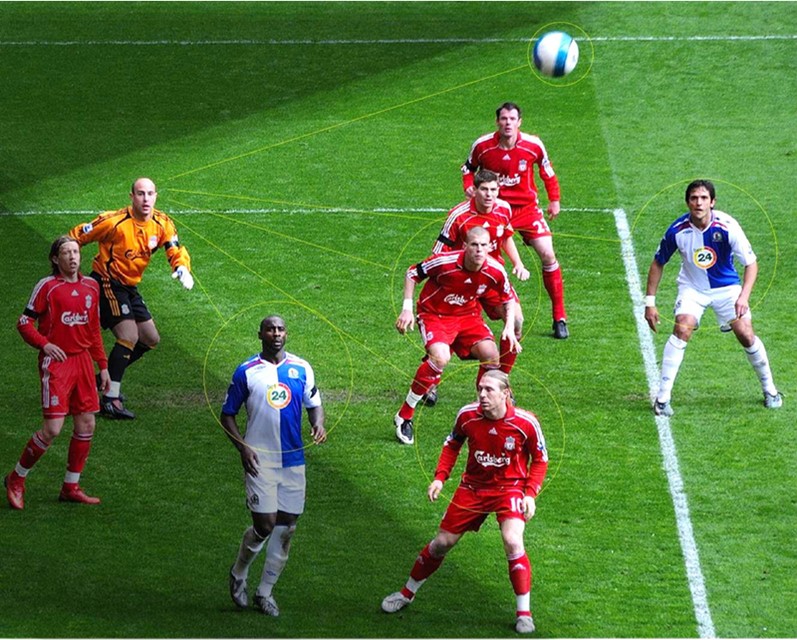
Team sports are particularly demanding because the important information is distributed across space.
Consider a midfielder receiving a pass. The ball matters. So does the defender approaching from one side. So does the teammate making a run behind that defender.
Another opponent may be closing the passing lane while a second teammate changes direction further away.
If the player waits until receiving the ball and then looks directly at each option, much of the opportunity may already have disappeared.
This is why skilled players in sports like basketball, hockey and football repeatedly gather information before and during possession.
They scan. They update where players are. And when their gaze settles on the immediate action, they can continue monitoring movement occurring outside that central point.
The visual task is therefore not simply:
Where is the ball?
It is closer to:
How is the whole pattern around the ball changing?
That is a much richer perceptual-cognitive challenge.
Peripheral vision often feels vague because we cannot inspect objects in the same detail as we can when looking directly at them. But detailed recognition is not always what the athlete needs.
Imagine a teammate beginning a run at the edge of your visual field. You may not clearly see their facial expression or even fine details of their body position.
But you may still detect:
For many sporting decisions, this information is already useful. A player does not necessarily need a detailed visual snapshot of every teammate. They need enough information to understand how the structure of play is changing.
This helps explain why peripheral information can contribute so strongly to situational awareness even though it lacks the clarity of direct gaze.
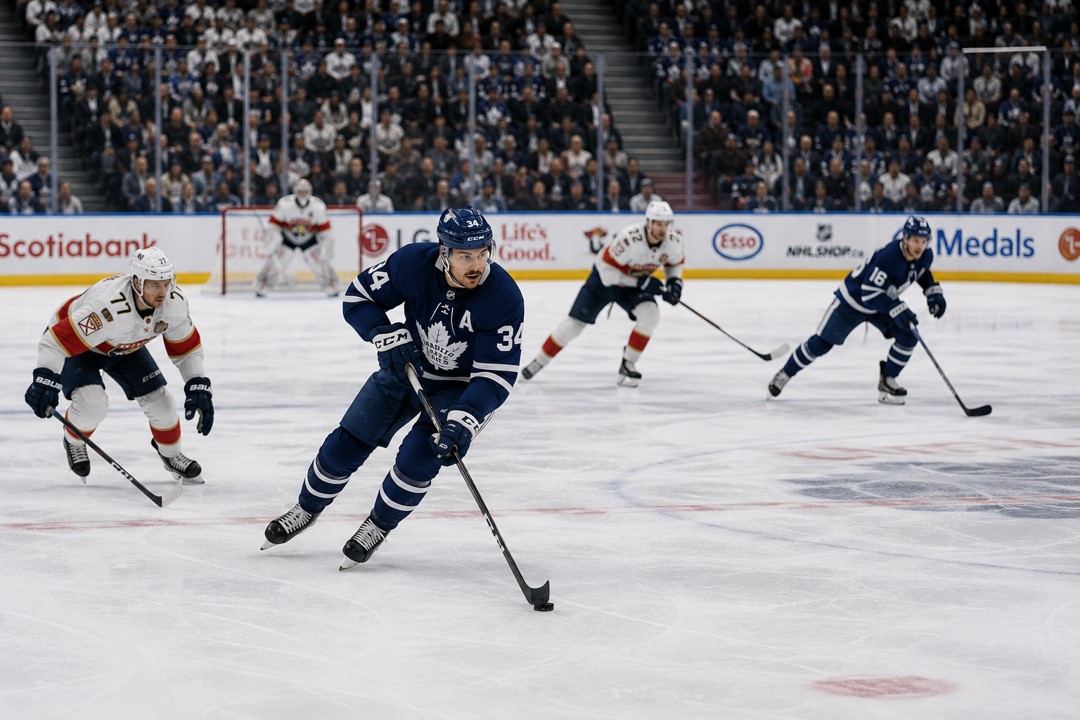
Simply having a wide field of view does not mean everything within it is being processed equally. Attention still has to select what matters, and this is an important distinction.
Two athletes can look toward essentially the same part of the field while extracting very different amounts of useful information from the surrounding scene.
One may be almost entirely occupied by the player directly ahead, while another may remain sensitive to movement across several relevant locations.
The difference is therefore not only about eyesight. It also involves how effectively attention is distributed across the visual field. This becomes especially important when several things are moving simultaneously.
Elite awareness should not be imagined as a perfect internal map of everything happening around the athlete. The environment changes too quickly for that.
Instead, awareness is continually updated.
A player scans before receiving the ball.
The scene changes.
Peripheral movement provides additional information.
The player looks somewhere else.
Another part of the situation is updated.
What feels like effortless awareness is actually an ongoing process of gathering, maintaining, and refreshing information. This is why elite players can sometimes appear to know where someone is without looking directly at them at the final moment. They may already have information from an earlier scan, combined with new movement detected indirectly.
Sports vision training sometimes uses a technique called a visual pivot.
The basic idea is simple: maintain gaze on a central reference point while deliberately spreading attention across the surrounding visual field.
Rather than continually moving the eyes toward every target, the athlete practices processing information occurring around the point of fixation.
NeuroTracker provides one example of this approach. During NeuroTracker 3D multiple object tracking, the user maintains central fixation while tracking several moving targets across a wide visual field and through depth.
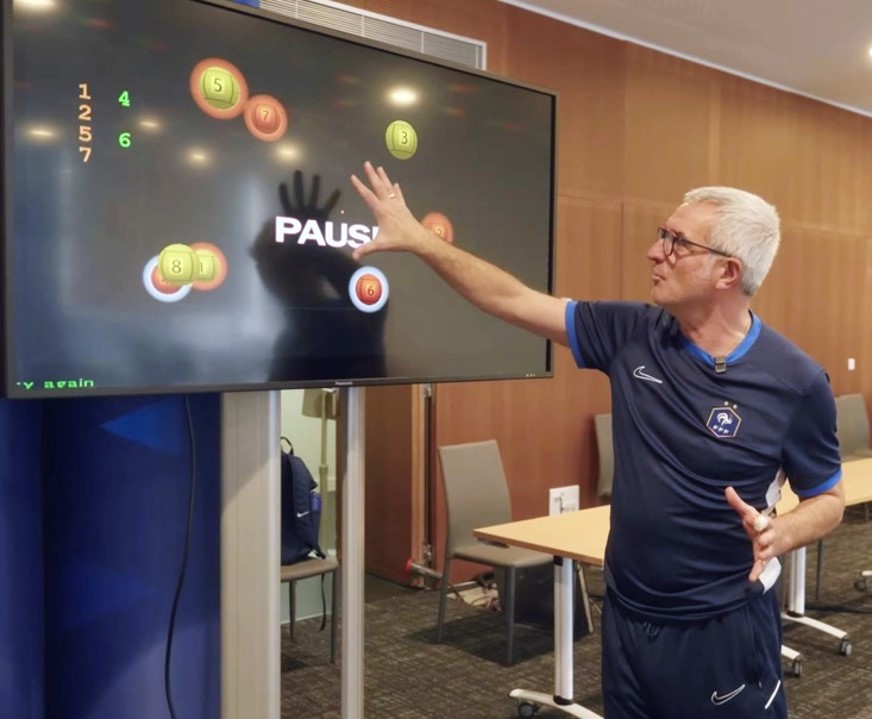
This illustrates an important training principle: the underlying relationship between gaze and attention can itself become something that is deliberately challenged and practiced.
That principle also helps explain why visual behavior in elite sport is not simply a fixed talent.
Elite athletes do not literally see behind themselves or process every part of the visual field with equal clarity. What they develop is a more efficient way of using limited visual information.
They learn when to move their eyes.
They learn when to keep gaze stable.
They gather information before it becomes immediately necessary.
And they use attention to remain sensitive to meaningful movement occurring outside their direct gaze.
Team sports make this especially visible because they constantly force players to understand a spatial pattern larger than the object directly in front of them.
The remarkable part is not that elite athletes can somehow see everything. It is that they learn how to extract more of what matters without needing to look directly at everything first.
Welcome to the Research and Strategy Services at in today's fast-paced.
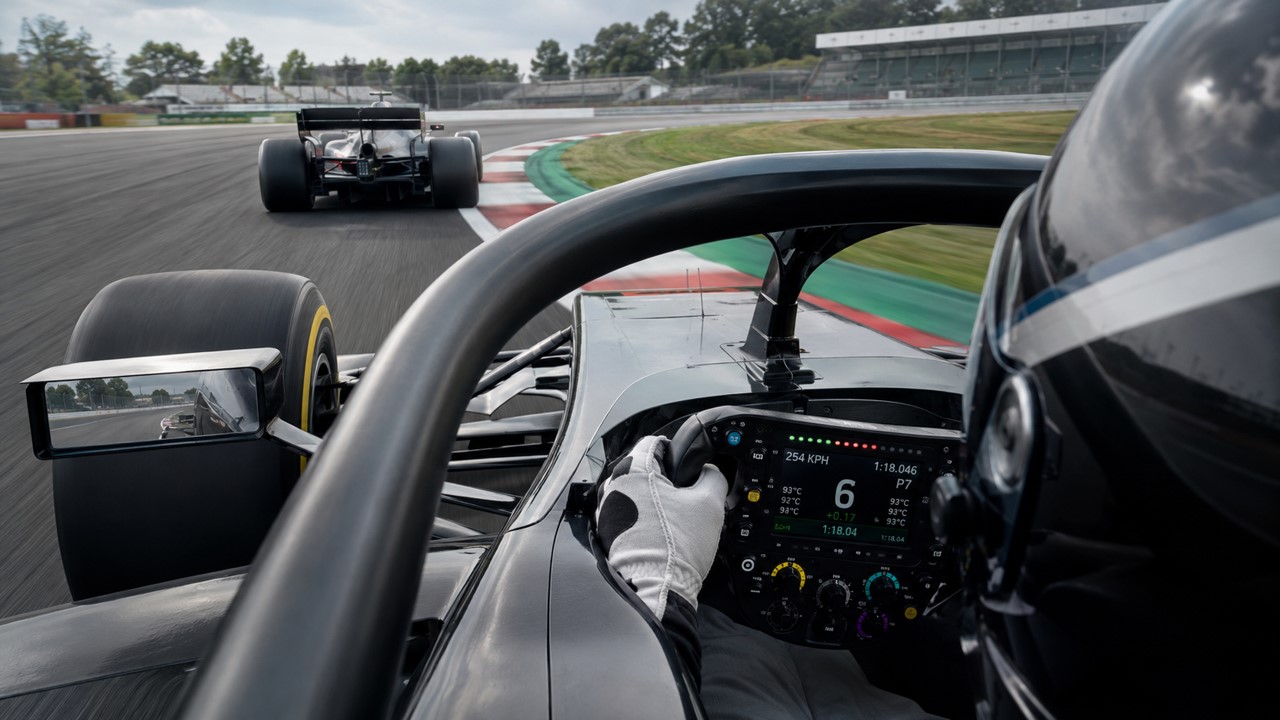
At Formula 1 speeds, performance depends on far more than fast reactions. This article explores how elite drivers prioritize information, anticipate what comes next, and continuously update the race at extreme speed.
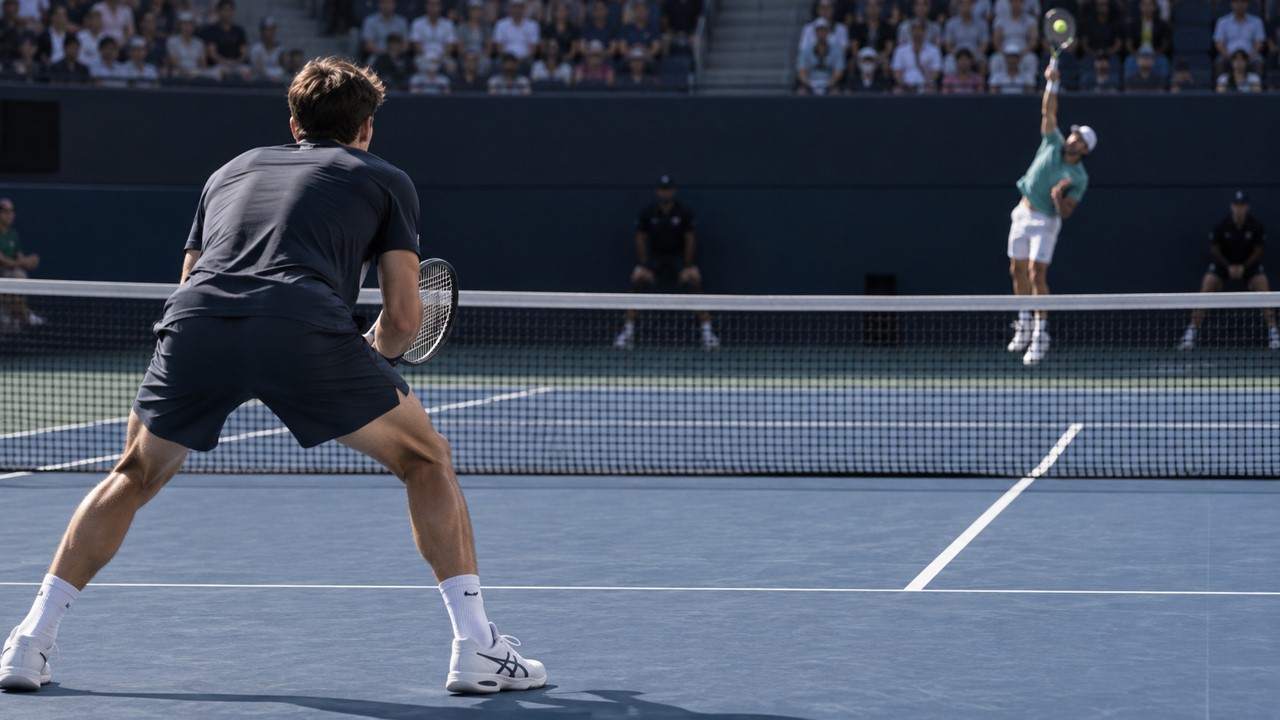
Elite tennis returners do more than react quickly — they extract useful information before the ball is even struck. This article explores how anticipation, body cues, and rapid updating help players solve the return before the serve fully unfolds.
Learn how modern sports medicine extends beyond treating isolated injuries with multidimensional rehabilitation approaches.
NeuroTracker is one of the most widely researched cognitive training systems, used in elite sports, military, and human performance settings worldwide. Built on 20 years of neuroscience research.