


Welcome to the Research and Strategy Services at in today's fast-paced.
Leadership roles in business often require processing large volumes of information under time pressure. Executives, traders, and managers frequently operate in environments where attention, decision-making, and cognitive endurance are critical.
Recent research has explored whether perceptual-cognitive measures may relate to performance in high-demand professional domains.
A study titled Cognitive Assessment and Trading Performance Correlations examined whether performance on a 3D multiple object tracking (3D-MOT) task was associated with trading metrics in independent traders.
The 3D-MOT task (commercially known as NeuroTracker) measures dynamic attention and processing speed by requiring participants to track multiple moving objects within a 3D virtual environment.
Twenty-nine traders were assessed remotely over multiple sessions, generating 624 trading observations. Researchers examined correlations between 3D-MOT speed thresholds and two trading metrics:
The study reported:
In simple terms, higher perceptual-cognitive scores were associated with stronger trading outcomes and lower downside risk within the dataset studied.
Importantly, the study was correlational. It does not demonstrate that training causes improved trading performance, but rather that cognitive-attentional capacity may relate to performance metrics in complex financial environments.
Financial trading involves:
Theoretical frameworks such as attentional control theory and limited attention models suggest that reduced attentional capacity can impair performance under pressure.
In this context, objective measures of dynamic attention may offer insight into performance variability.
Because the 3D-MOT task provides an objective speed-threshold metric, it may serve as:
Further research is needed to determine whether targeted perceptual-cognitive training can meaningfully influence business or financial outcomes.
While this study focused on traders, leadership roles share similar cognitive demands:
The findings suggest that cognitive-attentional capacity may be a relevant factor in professional decision-making environments. However, causal claims require controlled intervention studies.
Welcome to the Research and Strategy Services at in today's fast-paced.
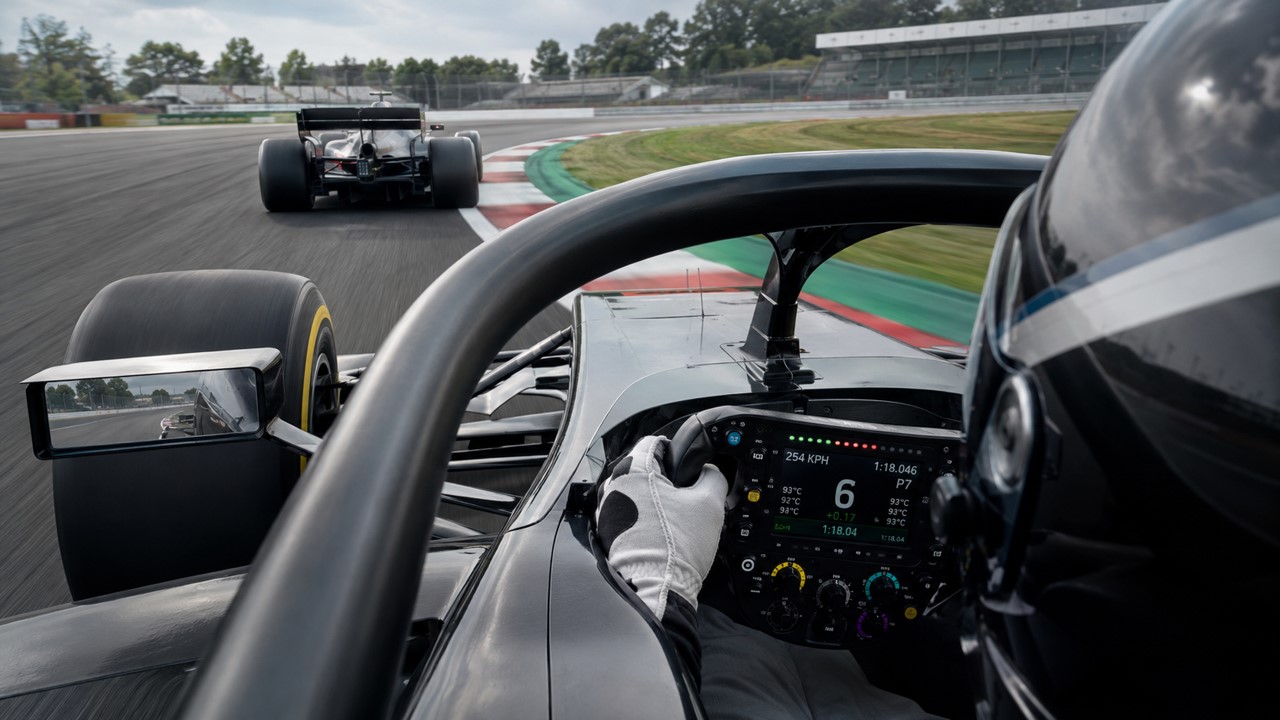
At Formula 1 speeds, performance depends on far more than fast reactions. This article explores how elite drivers prioritize information, anticipate what comes next, and continuously update the race at extreme speed.
Elite tennis returners do more than react quickly — they extract useful information before the ball is even struck. This article explores how anticipation, body cues, and rapid updating help players solve the return before the serve fully unfolds.
Elite athletes don’t need to look directly at everything to stay aware of a fast-changing play. This article explores how gaze and attention work together to monitor movement, spacing, and opportunity across the wider visual field.
NeuroTracker is one of the most widely researched cognitive training systems, used in elite sports, military, and human performance settings worldwide. Built on 20 years of neuroscience research.