



Welcome to the Research and Strategy Services at in today's fast-paced.
Every year, neuroscience advances—but 2025 felt like a turning point. Instead of merely watching how the brain works, scientists are increasingly learning how to repair, support, or even augment human cognition.
This year’s breakthroughs ranged from reversing brain aging in mice, to restoring speech with brain-computer interfaces, to organoids (mini-brains) that can learn. Many of these are early-stage discoveries, but they show what may be possible in the coming decades.
Here are seven of the most fascinating findings, explained in human terms rather than technical ones.
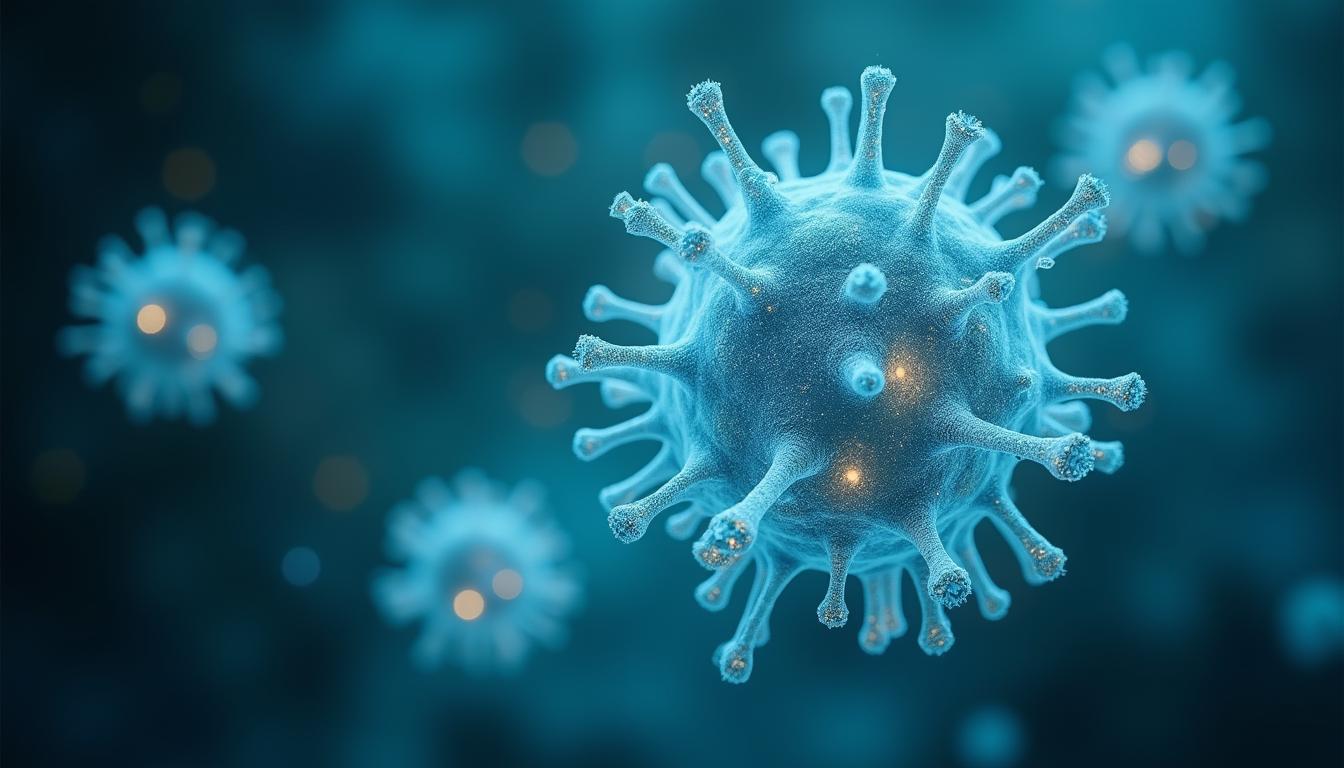
Imagine your brain as a busy city. Over time, garbage crews get slower, roads degrade, and traffic jams appear everywhere. Researchers found that replacing the “garbage crew” (aging immune cells in the brain) with younger, lab-grown versions restored brain function in aging mice.
The treated mice:
This wasn’t a neuron replacement therapy—rather, rejuvenating the support systems allowed neural circuits to work more smoothly, like upgrading city maintenance rather than rebuilding the city.
Implications:
This line of research could become a foundation for therapies aimed at:
Reference:
Moser, V. A. et al. Human iPSC-Derived Mononuclear Phagocytes Improve Cognition and Neural Health across Multiple Mouse Models of Aging and Alzheimer’s Disease (2025).
Link: https://doi.org/10.1002/advs.202417848
A massive lifespan study rewrote one of the most persistent myths in neuroscience: that the brain “peaks in your mid-20s.” Instead, researchers identified five major stages of brain-network organization, with transitions around ages 9, 32, 66, and 83.
A relatable metaphor: the brain continuously installs new “operating system versions” across life:
This moves the conversation from “decline” to adaptive re-architecting.
Implications:
This helps inform:
Reference:
Mousley, A. et al. Topological Turning Points Across the Human Lifespan. Nature Communications (2025).
Link: https://doi.org/10.1038/s41467-025-65974-8
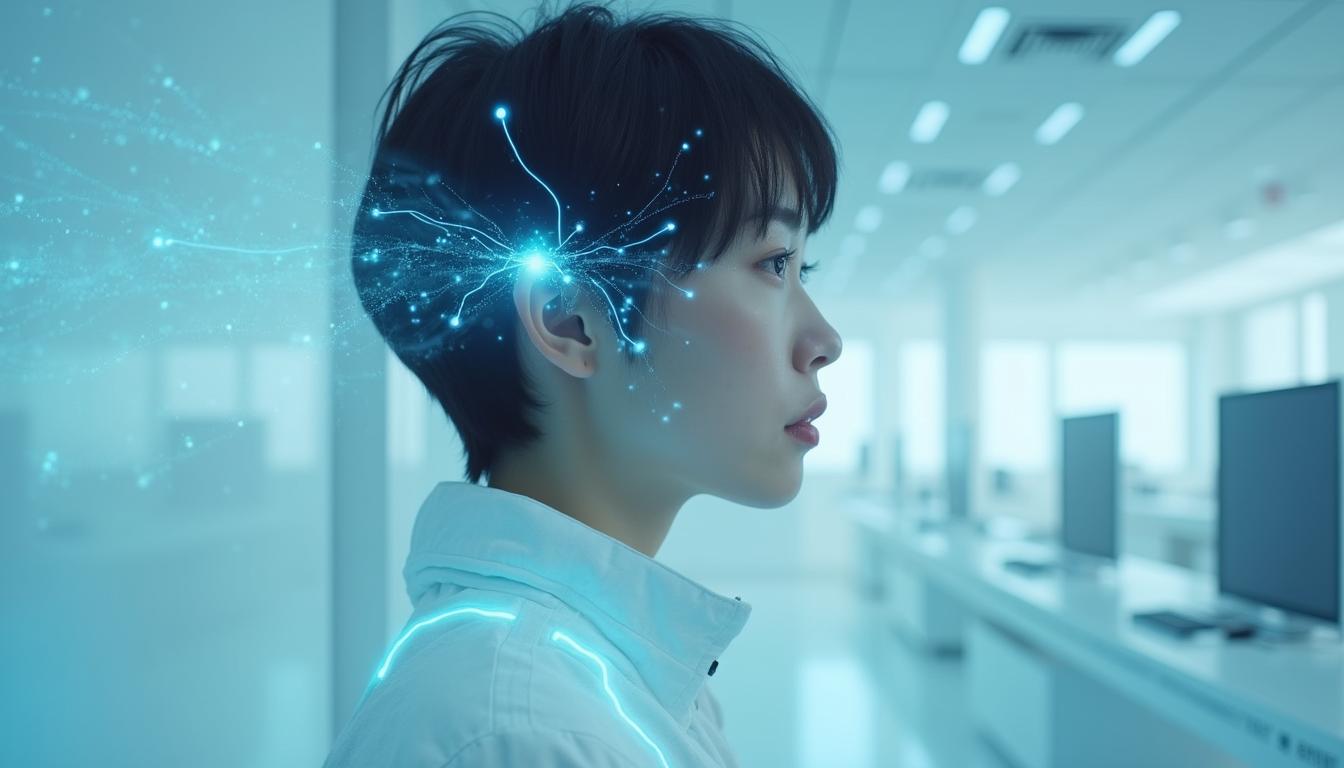
For people with paralysis or ALS, the brain often forms intact speech plans—they simply cannot move the muscles to speak. A 2024–2025 trial showed that a high-density BCI could decode those speech intentions at ~32 words per minute with remarkable accuracy.
The system reads neural activity from a small implant, translates it through a trained AI model, and converts it into synthesised speech.
It’s not telepathy. It’s translating the motor patterns of intended speech into sound.
Implications:
This breakthrough moves BCIs from laboratory demos to practical assistive communication tools, opening pathways to:
Reference:
Card, N. S. et al. An Accurate and Rapidly Calibrating Speech Neuroprosthesis. New England Journal of Medicine (2024).
Link: https://doi.org/10.1056/NEJMoa2314132

A research group working with epilepsy patients implanted hippocampal electrodes and attempted something bold: record neural patterns during memory encoding and then stimulate the same regions to improve recall.
And it worked—modestly, but consistently.
Think of it as pressing a subtle “reinforce this memory” button inside the brain.
Participants remembered:
Implications:
Future applications might support:
Reference:
Roeder, B. M. et al. Developing a Hippocampal Neural Prosthetic to Facilitate Human Memory Encoding and Recall of Stimulus Features and Categories. Frontiers in Computational Neuroscience (2024).
Link: https://doi.org/10.3389/fncom.2024.1263311
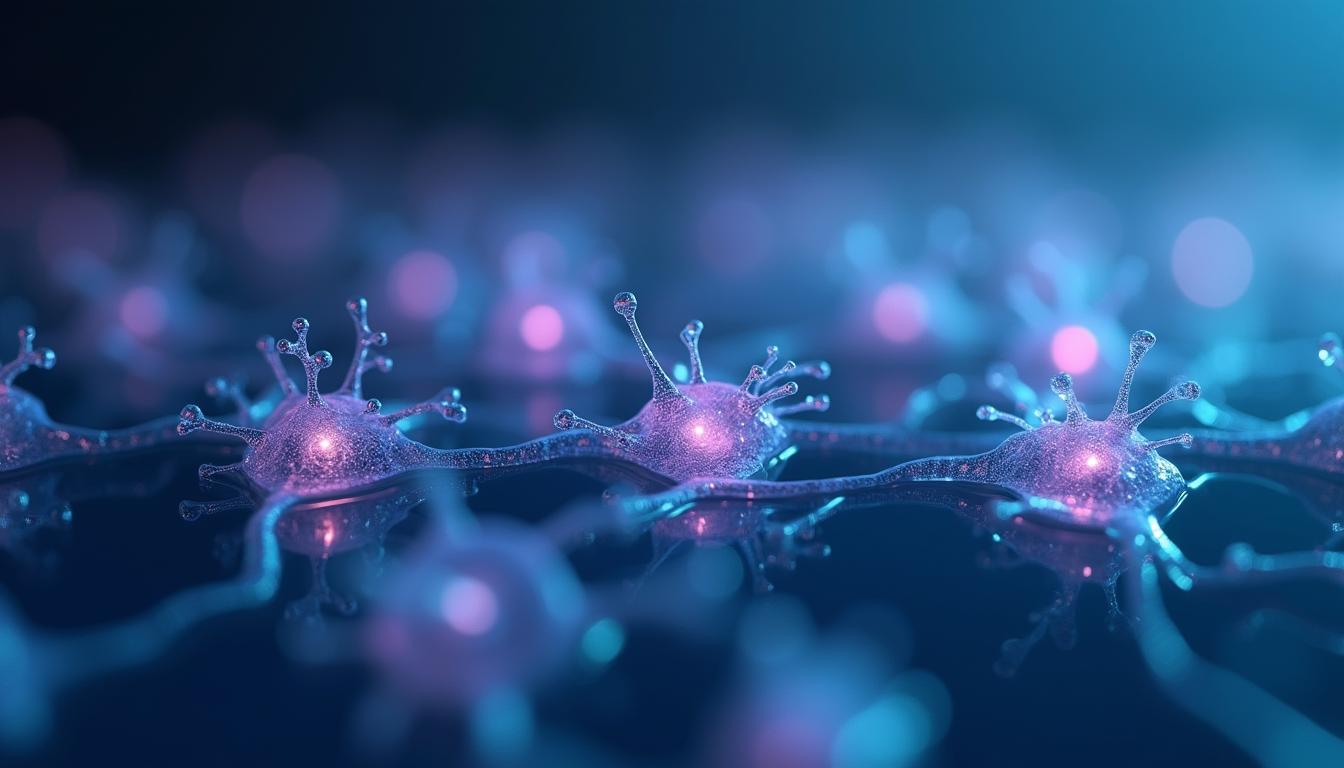
Organoids—tiny clumps of lab-grown brain tissue—have been around for years. But in 2024–2025, researchers connected a cortical organoid to a simple learning environment (“Cartpole”) where it had to keep a virtual pole balanced.
Over time, the organoid:
This wasn’t artificial general intelligence. But it was a biological network learning from consequences.
Implications:
This frontier opens the door to:
Reference:
Robbins, A. et al. Goal-Directed Learning in Cortical Organoids. bioRxiv (2024 preprint).
Link: https://doi.org/10.1101/2024.12.07.627350
Most bionic vision systems still require functioning eyes. But what if the damage is deeper—retinal degeneration, optic nerve failure, or trauma?
A 2025 Science Advances paper showed that by stimulating the visual cortex directly, blind participants could perceive:
This is foundational for a cortical visual prosthesis—a system that bypasses the eye entirely.
Implications:
Future directions may include:
Reference:
Grani, F. et al. Neural Correlates of Phosphene Perception in Blind Individuals: A Step Toward a Bidirectional Cortical Visual Prosthesis. Science Advances (2025).
Link: https://doi.org/10.1126/sciadv.adv8846
Temporally interfering (TI) stimulation uses overlapping high-frequency currents to produce a focused low-frequency effect deep in the brain—without surgery.
In mice, when applied to the motor cortex during skill learning, it produced:
Think of it as gently tuning the brain into a “learning-ready mode.”
Implications:
This suggests promising directions for human applications:
Reference:
Qi, S. et al. Temporally Interfering Electric Fields Brain Stimulation in Primary Motor Cortex of Mice Promotes Motor Skill Through Enhancing Neuroplasticity. Brain Stimulation (2024).
Link: https://doi.org/10.1016/j.brs.2024.02.014
Across all seven breakthroughs, a unifying theme emerges:
Neuroscience is shifting from observing the brain to interacting with it.
While each of these technologies is early-stage, together they paint a picture of a future where:
2025 didn’t give us sci-fi augmentation.
But it revealed the first real building blocks.
By Lee Sidebottom, Director of Communications and Concept Applications, NeuroTracker
Welcome to the Research and Strategy Services at in today's fast-paced.
NeuroTracker is one of the most widely researched cognitive training systems, used in elite sports, military, and human performance settings worldwide. Built on 20 years of neuroscience research.