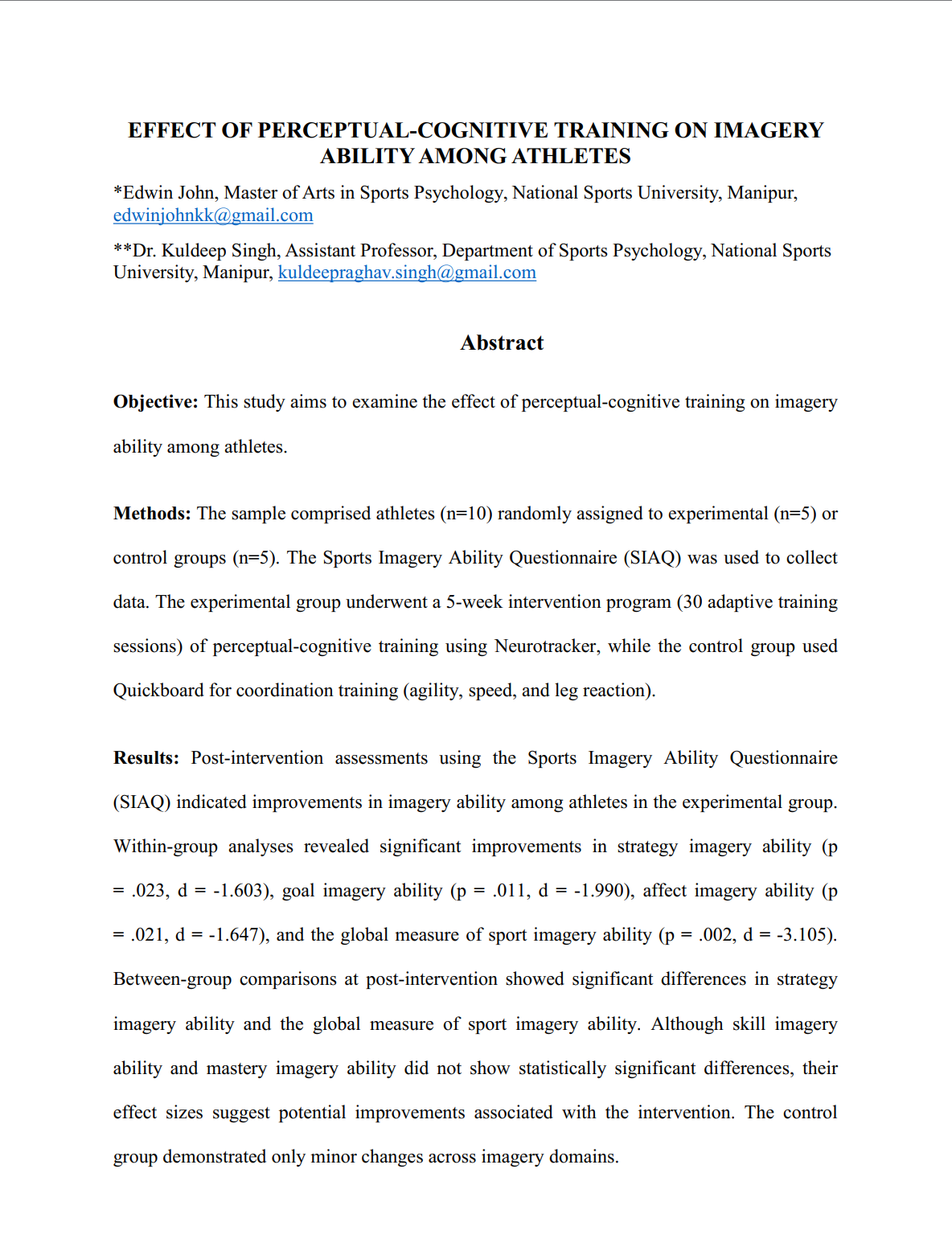
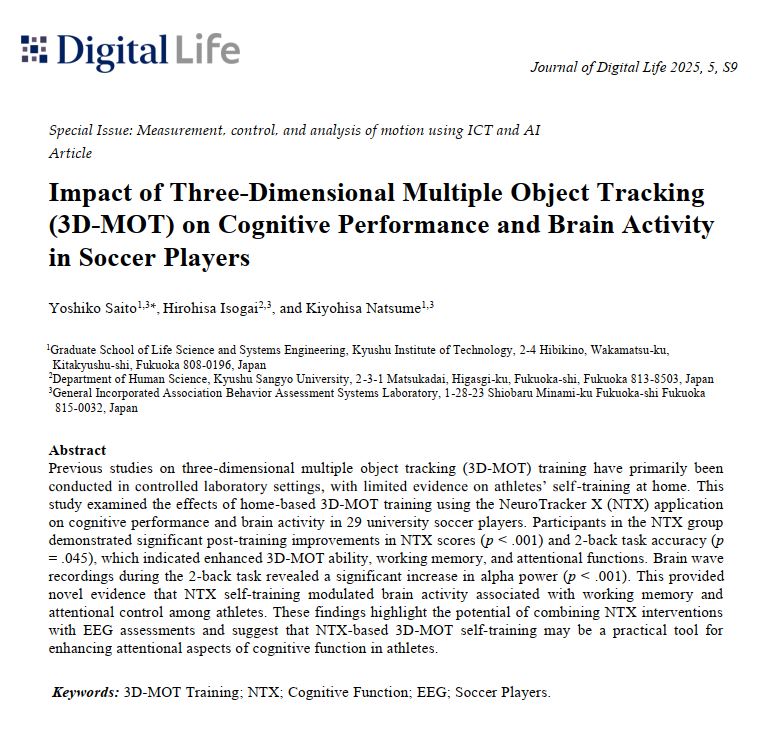
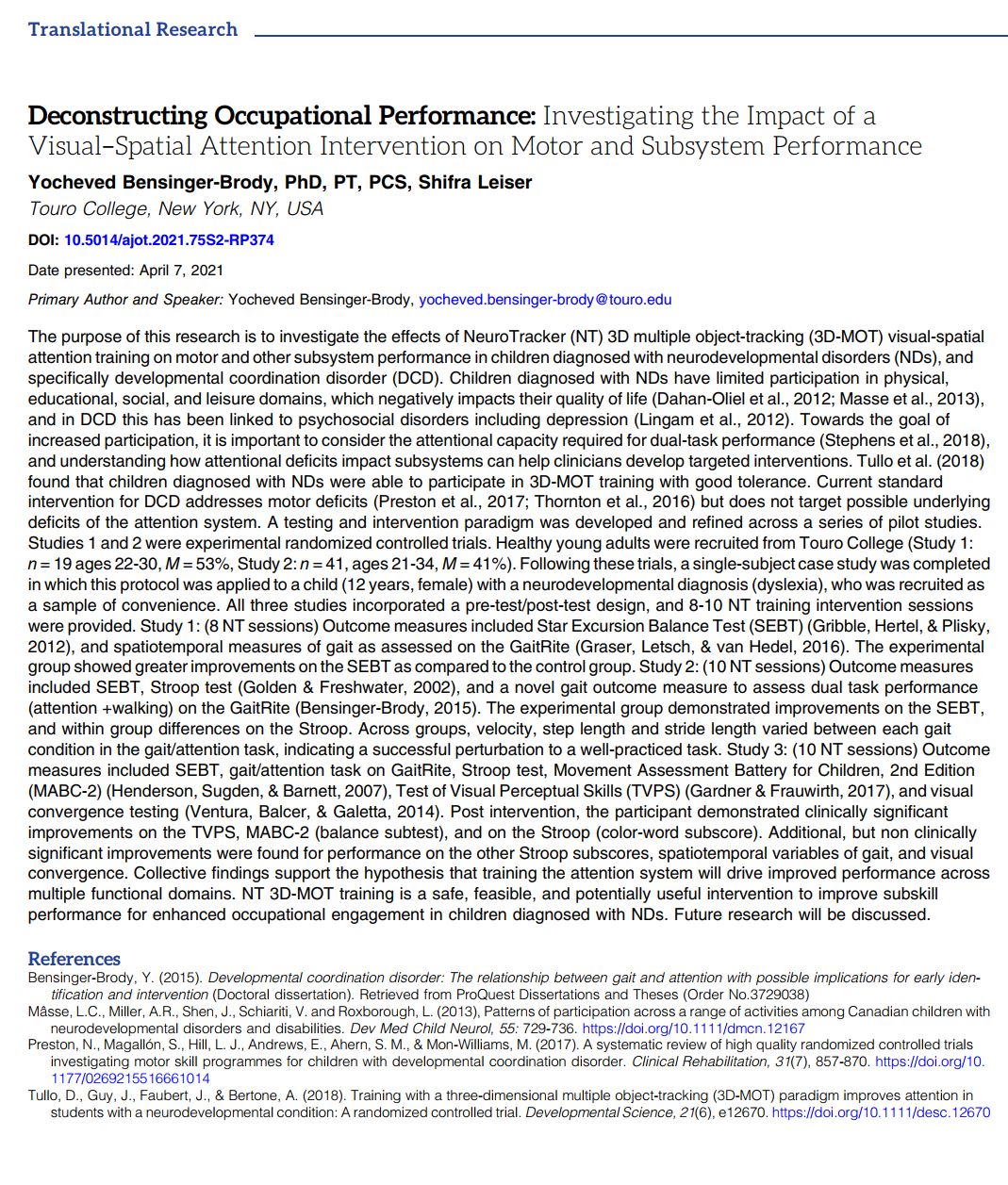
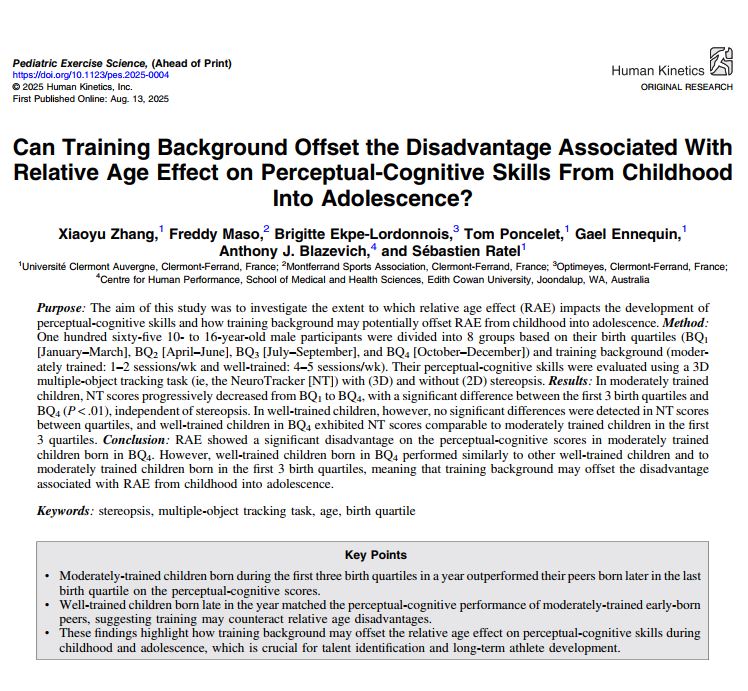
NeuroTracker has been tried and tested by many independent research centres across the world. Discover the diverse research published with our searchable database
Published Research Papers
Research Institutes Using NeuroTracker
Issued Patents and Patents Pending
NeuroTracker assessments reveal that healthy older people quickly recover their 3D multiple object tracking abilities diminished by natural aging.
This study measured the capacity of older participants to improve their tracking speed thresholds (NeuroTracker), to investigate if age related cognitive decline can be reversed with a training intervention known to be directly relevant to the effects of healthy aging.
For the first time NeuroTracker learning rates reveal the remarkably adaptability of world-class athletes' brains.
To assess the learning capacities of elite athlete populations compared to amateur athletes and nonathlete university students on a neutral cognitive training assessment (NeuroTracker).
Perceptual cognitive training improves biological motion perception evidence for transferability of training in healthy aging
To investigate if the decline in biological motion perception associated with healthy aging can be reversed with a short NeuroTracker training intervention.
Isolated NeuroTracker training with elite professional athletes provides superior baselines and initial learning rates versus dual-task training.
This paper covers foundational concepts of NeuroTracker’s relevance to training of cognitive capacities deemed critical in sports performance, particularly in dynamic team-sports. It also contains a study investigating the effects of attentional loads in learning paradigms, with the aim of understanding optimal load conditions for training perceptual-cognitive ability.
NeuroTracker baselines in 2D and 3D reveal lower binocular stereo abilities for health children and older people compared to adults.
3D vision (binocular stereo) develops during childhood and tends to reduce after 65 years of age. This study aimed to investigate whether these effects are significant when processing complex and dynamic motion.

NeuroTracker is one of the most widely researched cognitive training systems, used in elite sports, military, and human performance settings worldwide. Built on 20 years of neuroscience research.