

Welcome to the Research and Strategy Services at in today's fast-paced.
Most people already understand the broad ingredients of healthy aging: move regularly, eat well, sleep enough, stay mentally active, maintain social connections, and keep challenging yourself in ways that preserve physical and cognitive capacity. The difficult part is rarely knowing that these habits matter. It is sustaining them consistently enough for them to become part of everyday life.
That is where other people can make a surprisingly large difference. Longevity is often framed as a personal project built around your fitness, diet, recovery, sleep, biomarkers, or health data. But many of the habits that support long-term physical and cognitive capacity become easier to maintain when they are embedded in shared routines, common goals, friendly competition, and social identity.
The benefit is not simply that company makes healthy activities more enjoyable. Doing things with others can change the structure of motivation itself.
A solo intention is easy to postpone. A planned walk with a friend, a weekly training session, a group class, or a shared challenge creates another reason to show up, even on days when motivation is lower.
That external structure matters because motivation is rarely stable. Energy changes, work becomes busy, weather gets worse, and enthusiasm naturally rises and falls. Even habits we genuinely value can be displaced by easier alternatives.
When another person is involved, the decision changes. Instead of asking only whether you feel like exercising today, there is also the knowledge that someone else may be expecting you. The commitment becomes partly social rather than entirely internal, reducing the amount of negotiation required to begin.
This does not require intense accountability or formal competition. Simply knowing that an activity is shared can make it more resilient to the normal fluctuations of everyday life.
Longevity habits are valuable partly because they are repeated. One workout does not create fitness, one healthy meal does not transform metabolic health, and one good night of sleep cannot compensate for months of poor recovery.
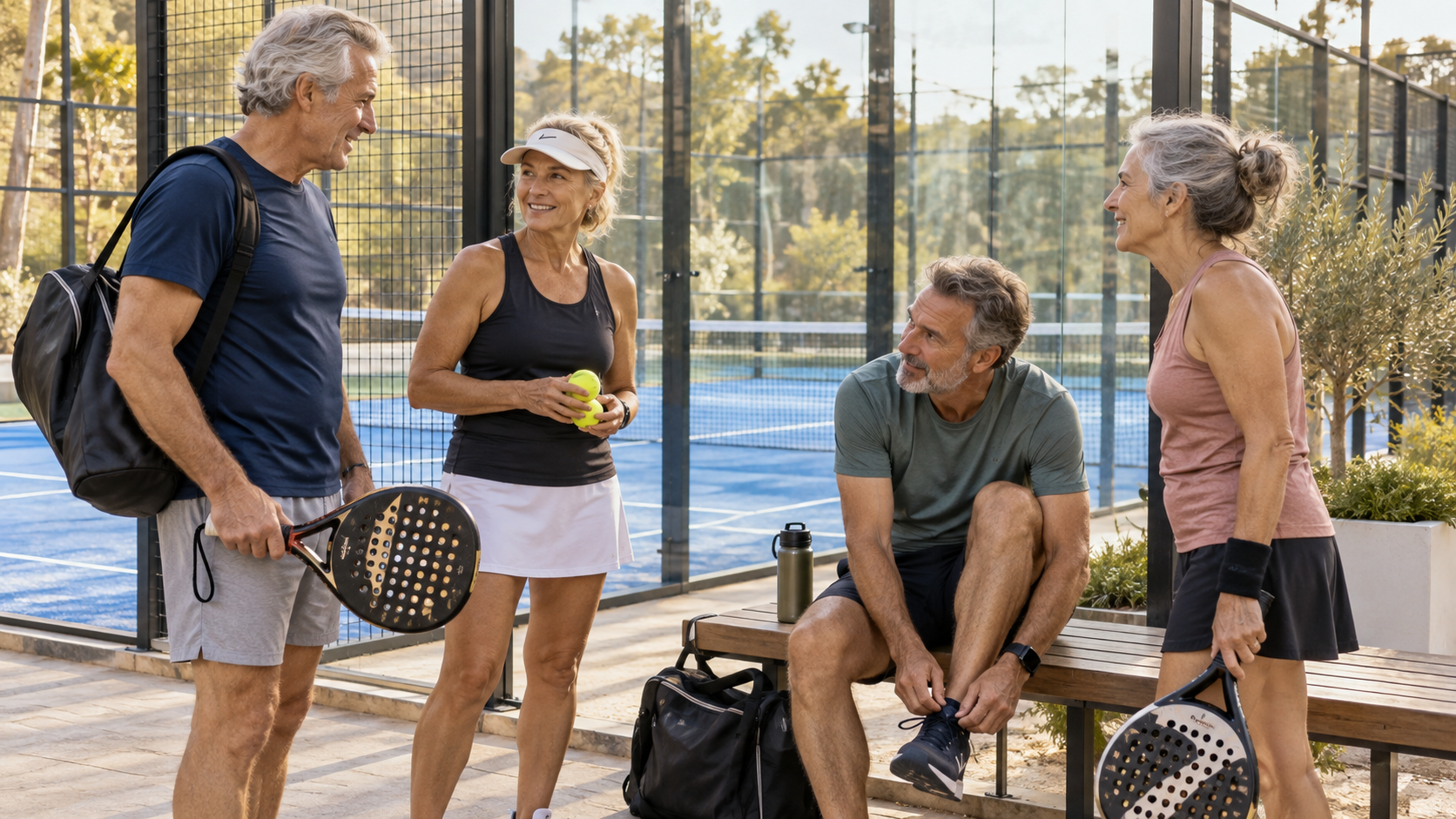
What matters is the rhythm that develops over time. Social activities naturally create this structure because a weekly tennis match, walking group, strength class, cycling club, dance session, or recreational league can occupy a regular place in the calendar.
As repetition becomes established, the behavior becomes less dependent on fresh motivation. It stops feeling like a health decision that must be made again every week and starts becoming something that simply happens.
This is one reason social structure can be particularly useful in longevity fitness. The challenge is not only choosing behaviors that support long-term capacity, but making them regular enough to influence health and performance over years.
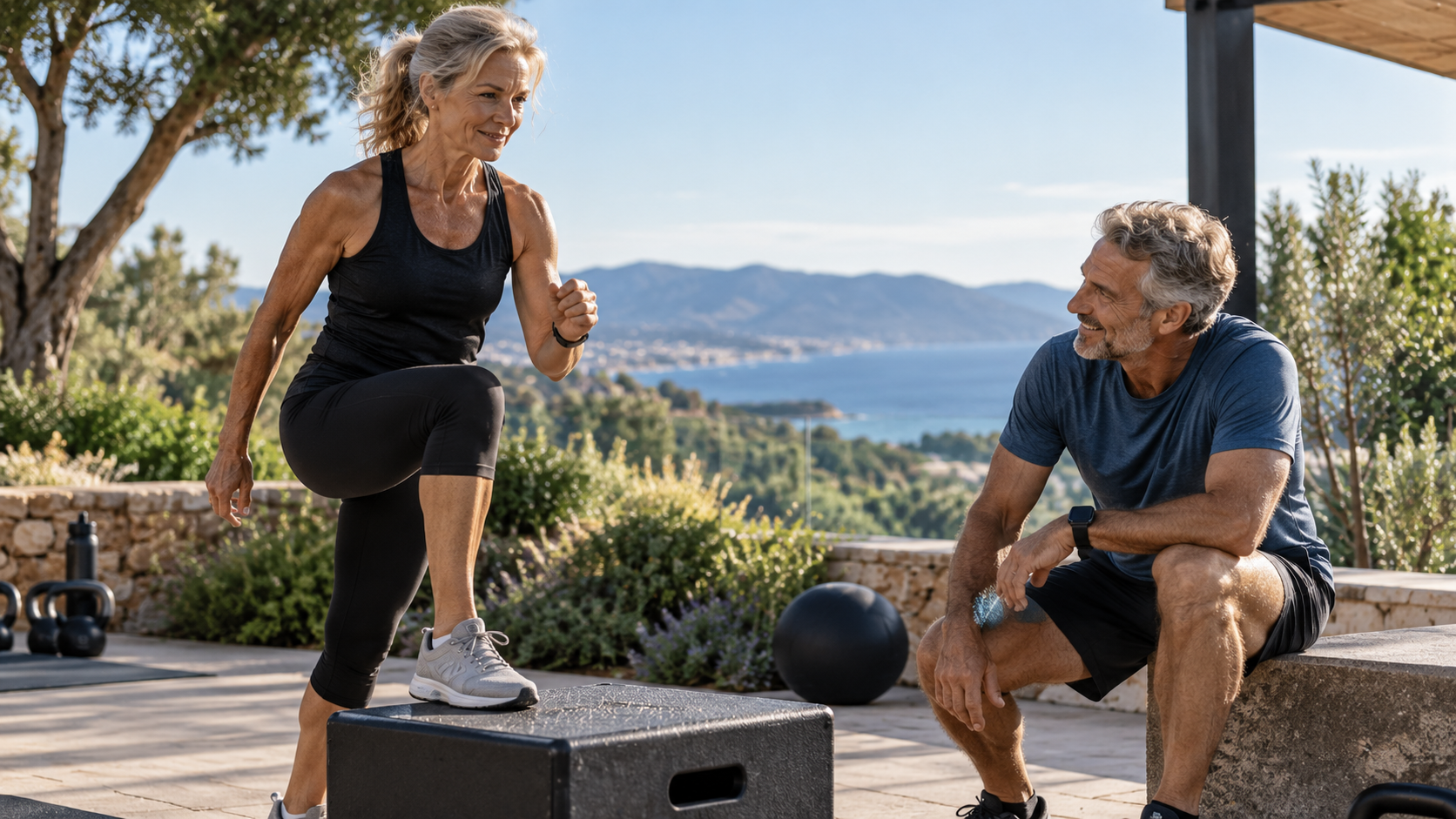
Improvement can be motivating on its own. Walking farther, lifting more, moving more confidently, recovering faster, or learning a new skill gives people evidence that effort is producing change.
But progress can become more reinforcing when it is visible to others. A training partner notices that you are moving better. A friend remembers that a route used to feel difficult. A teammate sees that you are keeping up more comfortably. A coach or instructor may notice changes that are hard to recognize from inside your own experience.
This creates a useful feedback loop. Effort produces progress, progress becomes visible, and recognition can strengthen commitment to the behavior that produced it.
The important part is not praise for its own sake. It is that improvement becomes part of a shared story rather than an isolated personal metric.
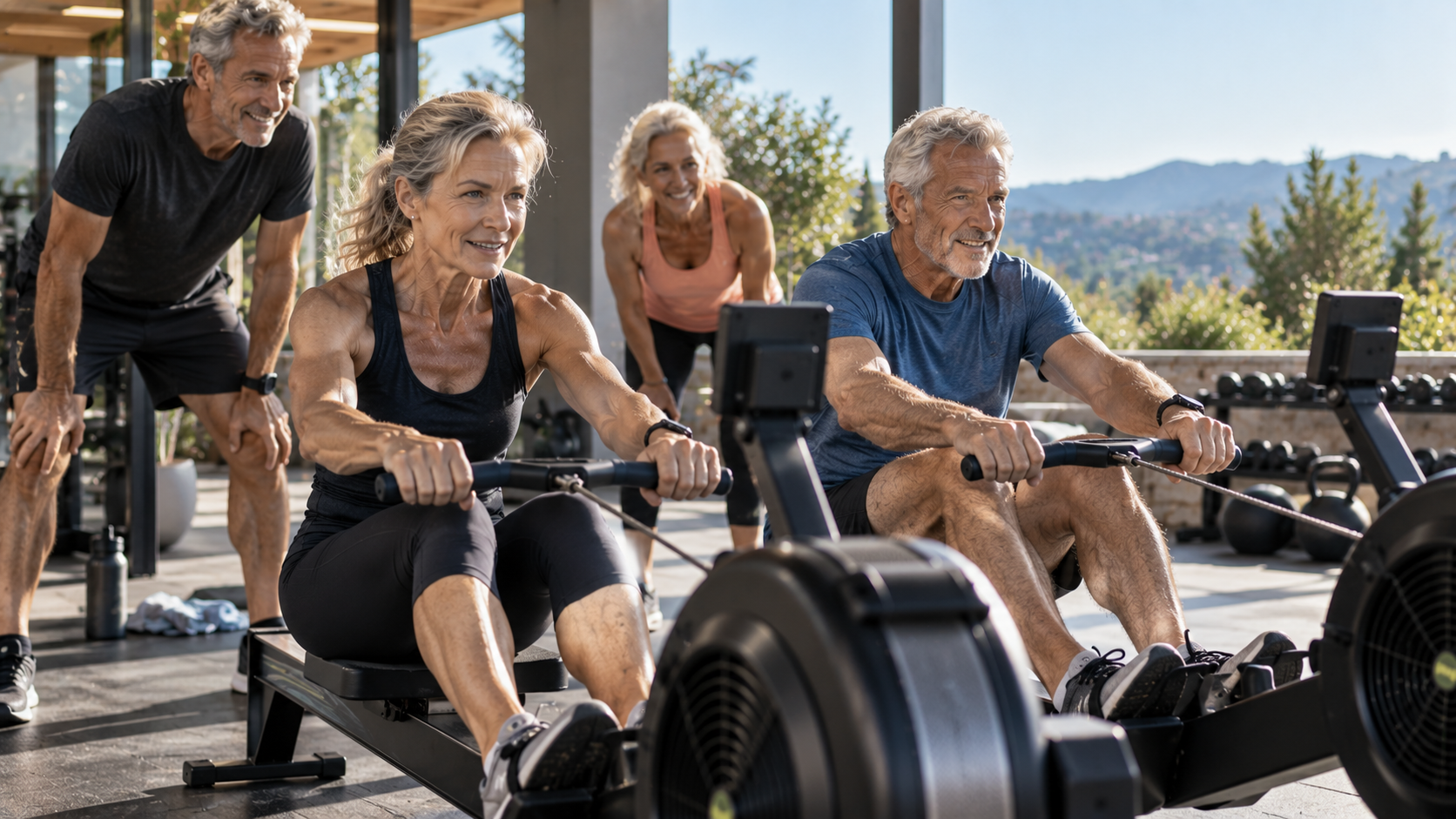
Competition is one particularly visible form of social motivation. For some people, having someone to chase, a score to improve, or an event to prepare for can turn exercise from an obligation into a challenge.
That does not mean longevity needs to become a contest. The useful element is often the structure competition creates: a target, measurable progress, a reason to practice, and a moment when that preparation becomes meaningful.
Friendly competition can also make effort feel playful. Someone may train harder for a casual doubles match or local event than they would during a solitary session, not because the activity has suddenly become medically important, but because it has become socially relevant and emotionally engaging.
In that sense, competition can support longevity indirectly. It gives repeated effort a purpose beyond the abstract instruction to exercise more.
There is a meaningful difference between thinking, “I should exercise more,” and thinking, “I’m someone who trains three times a week.”
The second statement reflects identity, and social environments help build these identities because people begin to see themselves through repeated participation. Someone joins a walking group and becomes a regular walker. Someone starts playing padel and begins organizing parts of the week around matches. Someone joins a strength class and gradually becomes comfortable thinking of themselves as physically capable.
Once behavior becomes part of identity, it often requires less deliberate motivation. The person is no longer repeatedly deciding whether they should engage in the activity. They are doing what people like them do.
For longevity, that can be a more durable foundation than repeatedly trying to follow health advice from scratch.
Health metrics can be useful. People track heart rate, sleep, body composition, strength, glucose, recovery, balance, and many other measures, but numbers become more meaningful when they support something a person genuinely wants to do.
Being able to hike with friends, keep up during a game, travel without worrying about mobility, play with grandchildren, learn a new sport, or return to an activity that once felt too difficult translates health into capability.
This is where the idea of longevity fitness becomes especially useful. Instead of treating healthy aging only as the prevention of disease, it emphasizes preserving and developing the physical, cognitive, and functional capacities that allow people to keep participating fully in life.
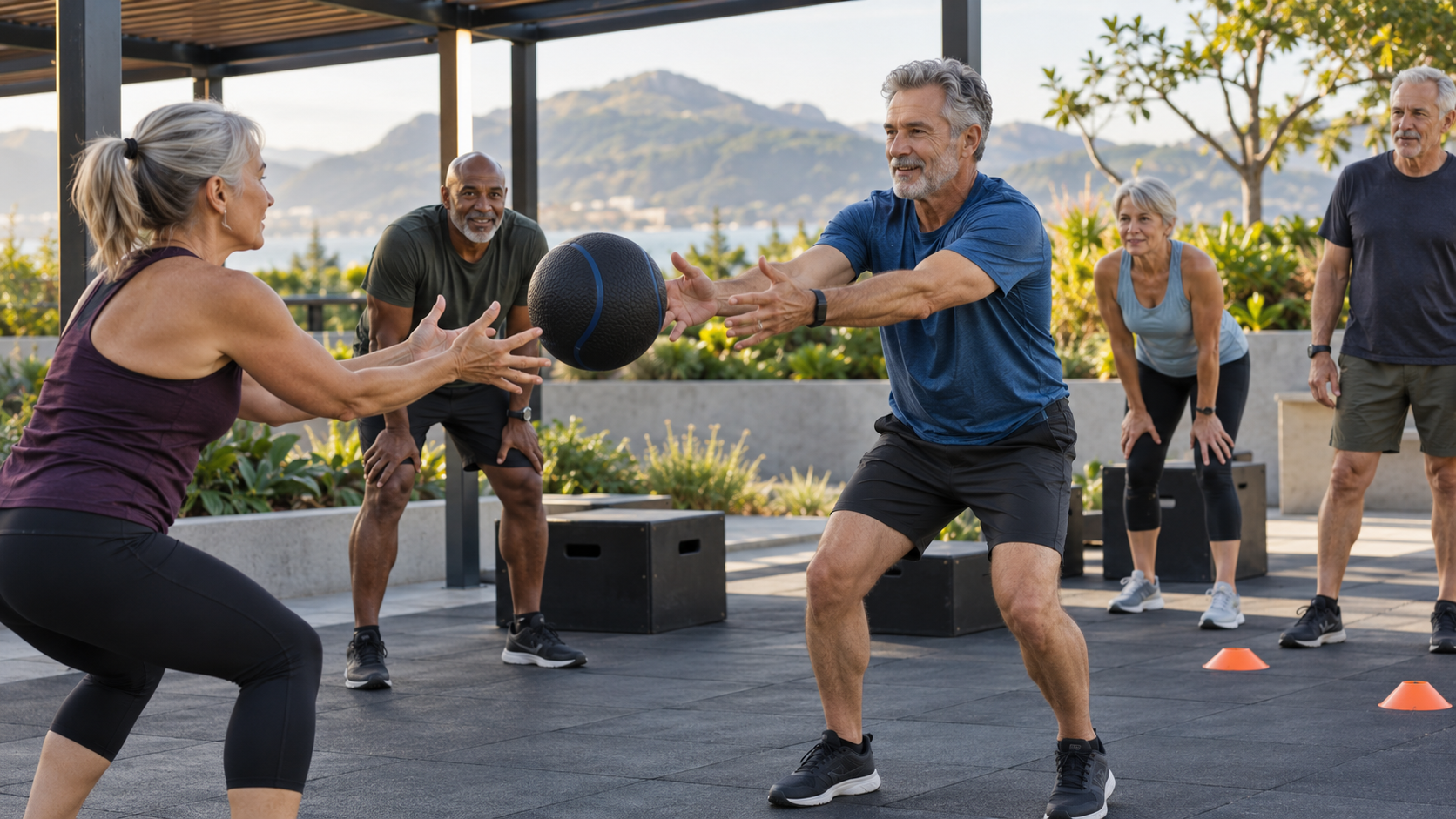
Strength matters, but so do balance, coordination, confidence, cognitive capacity, recovery, and adaptability. Shared activities often combine several of these at once while giving them an immediate reason to matter.
It is tempting to think of social connection as something added on top of exercise or healthy habits, but in practice it can be part of the mechanism that keeps those habits alive.
A person may continue attending a class because they enjoy seeing the same people. They may keep training because a friend is preparing for the same challenge. They may stay active because their social life partly depends on activities that require physical capability.
Movement and social connection can therefore reinforce each other. The habit supports the relationship, while the relationship supports the habit.
That reciprocal structure can make healthy behavior more resilient than a plan that depends entirely on individual discipline.
One limitation of many conversations about aging is that they become heavily focused on maintenance: maintain strength, maintain mobility, maintain cognition, maintain independence. Those are important goals, but they can make later life sound like a defensive exercise in protecting what remains.
Shared challenge offers a more active frame. It creates reasons to improve, whether that means learning a new skill, beating a previous time, playing better, traveling farther, competing more confidently, or attempting something that once felt too difficult.
This shifts the emphasis from preservation alone toward continued adaptation. For many people, the motivation to maintain capacity may be strongest when that capacity is being used for something meaningful.
Longevity habits do not thrive simply because people understand them. They thrive when they become embedded in routines, relationships, identities, and goals that make repeated action easier to sustain.
Other people can help create that structure by making effort more consistent, progress more visible, challenge more engaging, and healthy behavior more relevant to everyday life.
Living well for longer is partly about preserving capacity, but capacity becomes far more meaningful when it allows people to keep participating, competing, learning, connecting, and doing things with others.
Welcome to the Research and Strategy Services at in today's fast-paced.
Attention can become crowded long before it feels overloaded. This article explores how unfinished tasks, background priorities, and everyday demands can quietly occupy attention and shape performance.
Longevity is increasingly about more than living longer—it’s about preserving the capacity to live well for longer. This article explores why healthspan is becoming the practical focus of modern healthy aging.
HealthSpan: Redefined, by Dr. Sean Fletch, offers a clear and practical framework for thinking about long-term health and the ability to meet life’s demands over time.
NeuroTracker is one of the most widely researched cognitive training systems, used in elite sports, military, and human performance settings worldwide. Built on 20 years of neuroscience research.