



Welcome to the Research and Strategy Services at in today's fast-paced.
There’s something strangely powerful about the holiday season.
A song from decades ago plays in a shop and suddenly you’re eight years old again, wearing a sweater you’d forgotten existed.
A familiar smell in the kitchen pulls you into a memory you haven’t visited in years.
A certain kind of quiet winter evening makes everything feel softer, slower, and somehow more meaningful.
It’s nostalgia — the warm, slightly bittersweet psychological time machine that seems to activate at full strength every December.
But nostalgia isn’t magic. It’s neuroscience, psychology, culture, and sensory-rich tradition woven together. And when you look closely, Christmas (and the holiday season generally) is engineered, almost perfectly, to evoke it.
Let’s explore why.

Most memories are formed when our senses fire together.
And the holidays provide more sensory cues than any other time of year.
The smell of pine, cinnamon, mulled spices, cold winter air — these are powerful memory triggers.
The olfactory system has a direct neural pathway to the amygdala and hippocampus, the brain regions responsible for emotional memory.
This is why one whiff of a certain food can take you back 20 years before you can even tell what the smell is.
Holiday music is repetitive, patterned, and emotionally charged — exactly the type of auditory stimulus the brain loves to store.
Even if you “don’t like Christmas music,” your brain has memorised more of it than you realise.
Wrapping paper, soft winter fabrics, lighting candles — these tactile rituals create sensory anchors that strengthen memory encoding.
Lights, decorations, snow, warm candles, familiar colour palettes…
Holiday imagery is highly specific, which makes it easy for the brain to link visual scenes with emotional memories.
Together, these senses create what psychologists call multi-modal memory bundles — clusters of sensory signals that activate as a unit.
This is why nostalgia during the holidays feels immersive, not just mental. It’s a whole-body memory.
Humans love repetition — not because we’re boring, but because our brains crave predictability.
Tradition provides exactly that.
Every time you repeat a ritual — decorating a tree, cooking a favourite dish, lighting candles — the brain strengthens the emotional associations tied to it.
Tradition is less about what you do and more about the meaning your brain has stitched around it.
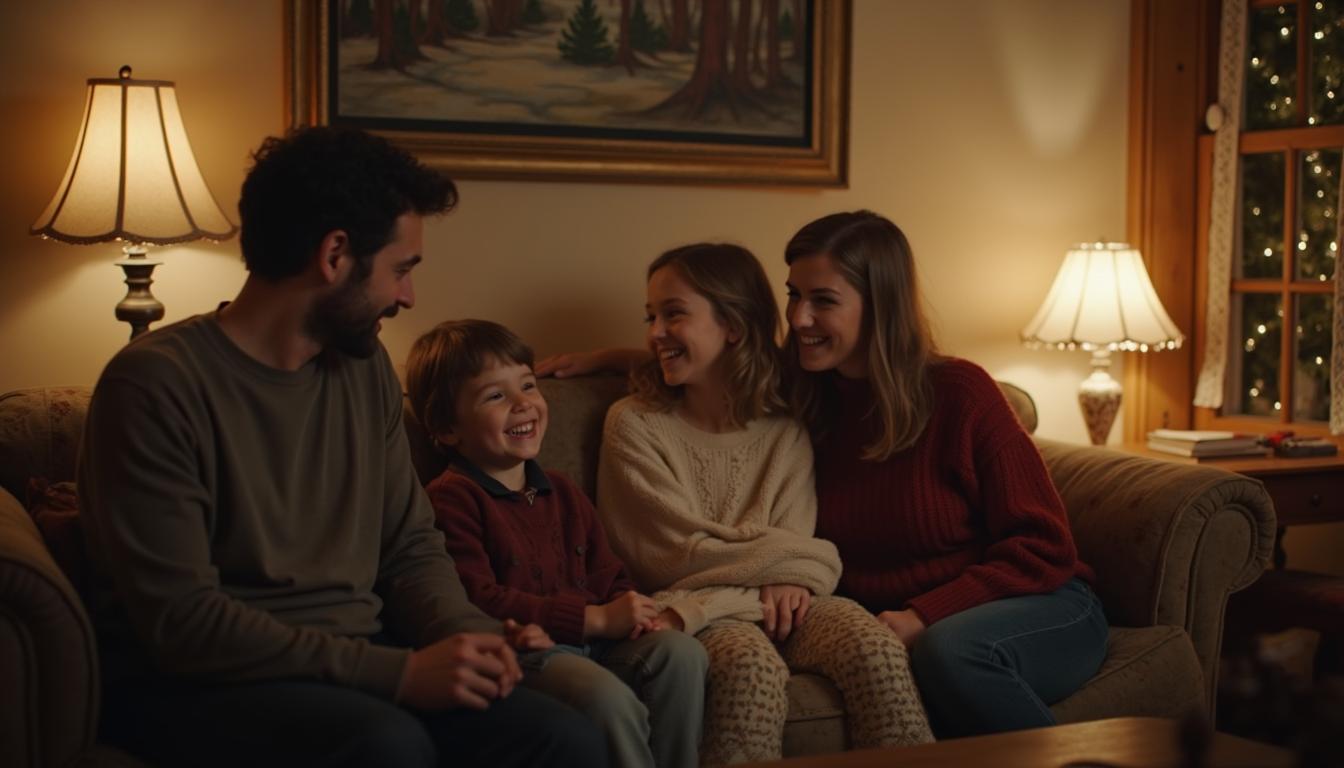
Humans are profoundly social creatures.
We’re wired to remember people, relationships, and moments of shared connection more strongly than isolated events.
During the holidays:
These interactions release oxytocin, the bonding hormone, which enhances emotional memory formation.
It’s why many of our most vivid memories aren’t about objects or events — they’re about people.
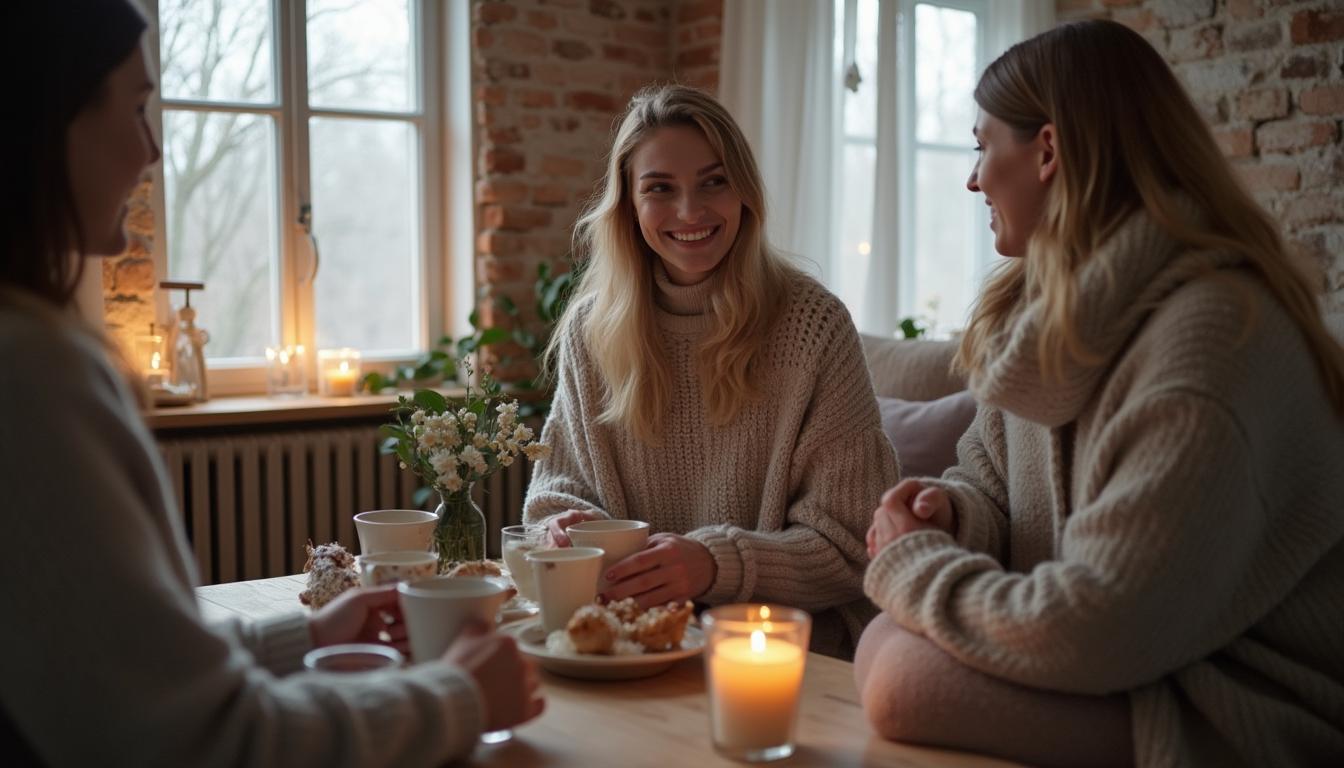
Hygge — the Danish concept of coziness, comfort, and gentle togetherness — isn’t just an aesthetic.
It’s a psychological state that signals:
“You are safe, warm, and connected.”
Hygge tends to include:
These cues reduce vigilance in the nervous system and create an emotional “open space” where nostalgia can arise more easily.
In a world that moves fast, hygge slows us down just enough to feel — and remember.
Research shows that nostalgia is actually protective and beneficial.
Nostalgia is the brain’s way of stitching the past and present together so we feel more whole.
The holidays simply give it more material to work with.
As children, everything is new and deeply encoded.
As adults, we revisit memories with more emotional context.
When we experience holiday cues now — music, food, rituals — our brain overlays who we were then with who we are now.
It creates a layered emotional experience that feels richer, more poignant, more complex.
This is why adults often say:
“I don’t know why I’m getting emotional — it’s just a song.”
But the “song” is a doorway into multiple versions of ourselves.
The holidays aren’t perfect. They can be stressful, messy, busy, or complicated.
But holiday nostalgia — that warm, familiar softness that seems to sit in the chest — is the brain’s quiet reminder that our lives have been filled with moments of meaning, connection, and love.
It’s a kind of psychological time travel that grounds us:
where we’ve been, who we’ve known, how we’ve grown.
So when nostalgia hits you this season — whether it’s from a song, a smell, a familiar light, or a cozy moment — let it land.
It’s not just memory.
It’s your brain whispering:
“These moments mattered. And more are still to come.”
Welcome to the Research and Strategy Services at in today's fast-paced.
Attention can become crowded long before it feels overloaded. This article explores how unfinished tasks, background priorities, and everyday demands can quietly occupy attention and shape performance.
Longevity is increasingly about more than living longer—it’s about preserving the capacity to live well for longer. This article explores why healthspan is becoming the practical focus of modern healthy aging.
HealthSpan: Redefined, by Dr. Sean Fletch, offers a clear and practical framework for thinking about long-term health and the ability to meet life’s demands over time.
NeuroTracker is one of the most widely researched cognitive training systems, used in elite sports, military, and human performance settings worldwide. Built on 20 years of neuroscience research.